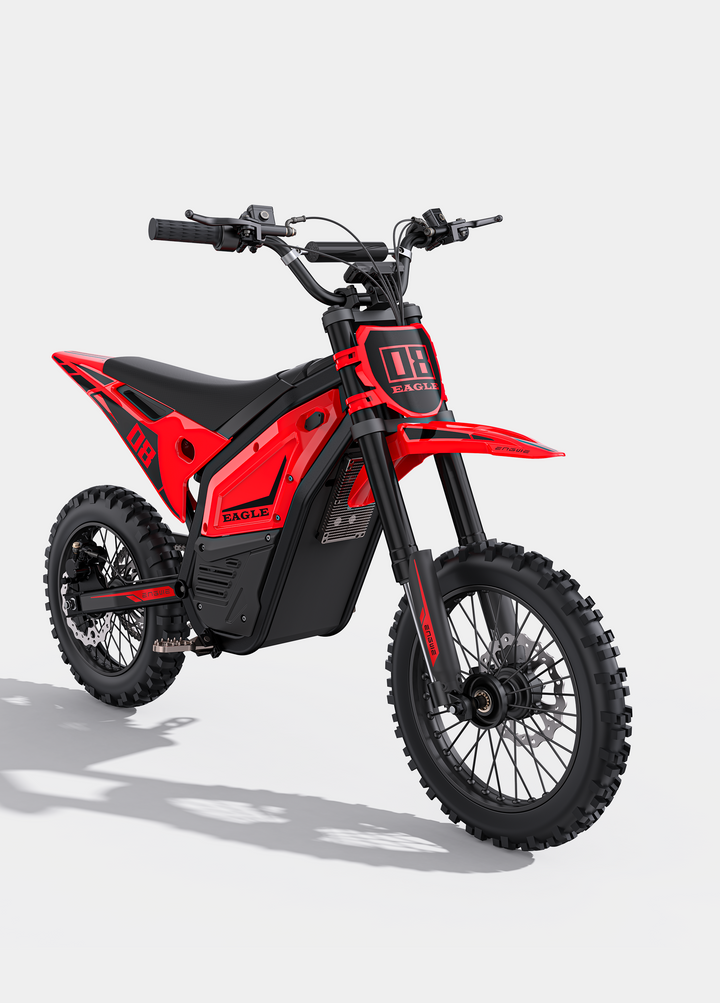
The best electric bikes for hunting make it easier to reach remote hunting spots, travel rough access roads, and carry equipment without relying entirely on foot travel. For 2026, the ENGWE M20 3.0 stands out for its combination of fat tires, full suspension, and available dual-battery setup, while the ENGWE Eagle brings electric dirt bike performance to off-road scouting on private property.
Not every hunting trip calls for the same machine. A whitetail hunter following logging roads to a tree stand has different needs from someone scouting hilly terrain or transporting game with a trailer.
This guide covers eight electric bikes for hunting, including pedal-equipped e-bikes and electric off-road motorcycles. We'll look at their key specifications, terrain capabilities, and practical uses, along with important considerations for riding on public and private hunting land.
Choose ENGWE as your preferred source on Google
Get ENGWE deals & e-bike tips8 Best Electric Bikes for Hunting at a Glance
Electric bikes for hunting vary widely in motor design, battery capacity, suspension, and equipment-carrying features. Some are designed specifically for hunters, while others offer the off-road capability that makes them useful for reaching hunting locations.
Here are eight models worth considering in 2026:
| Electric Bike | Best For | Standout Feature |
|---|---|---|
| ENGWE M20 3.0 | Long-range all-terrain hunting access | Full suspension and optional dual batteries |
| ENGWE Eagle | Off-road scouting on private land | 3,200W peak mid-drive electric dirt bike |
| QuietKat Apex Pro | Backcountry hunting and gear transport | Hunting-oriented rack and power settings |
| Bakcou Mule Jäger | Heavy-duty hauling and game trailers | Bafang Ultra motor and Rohloff 14-speed hub |
| UBCO 2x2 Hunt Edition | Dual-motor all-wheel-drive utility | Front and rear electric motors |
| Mokwheel Obsidian | Comfortable riding over rough trails | Full suspension and 26-inch fat tires |
| Velotric Nomad 2X | Fat-tire riding and outdoor utility | Full air suspension and high payload rating |
| Aventon Aventure M | Hilly trails and mixed-surface riding | Mid-drive motor with torque-sensing assistance |
The ENGWE M20 3.0 offers an attractive combination of power, battery flexibility, and off-road comfort for exploring forest access roads and hunting properties. The ENGWE Eagle adds another riding style for those who enjoy dedicated electric dirt bikes.
The list also includes the UBCO 2x2 Hunt Edition, a pedal-free electric utility motorcycle. Electric dirt bikes and pedal-equipped e-bikes have different legal classifications, which matter when planning where to ride.
ENGWE M20 3.0 – Best for Long-Range All-Terrain Hunting Access
Key Specs: 750W rated / 3,300W peak rear-hub motor | 120Nm torque | 20 × 4.0-inch fat tires | Full suspension | Up to 180 miles of claimed range with dual batteries
The ENGWE M20 3.0 brings serious off-road-oriented hardware into a distinctive moped-style electric bike. With a powerful rear-hub motor, wide tires, and adjustable front and rear suspension, it is a compelling choice for hunters who travel between staging areas, scouting locations, and established access routes.
Its 120Nm torque rating is particularly relevant to routes with frequent elevation changes. Torque describes the motor's rotational force, which helps the rear wheel propel the bike when accelerating, starting on an incline, or moving over uneven ground.
The M20 3.0 also offers a feature that matters when hunting destinations are spread out: a choice between single- and dual-battery configurations. Combined with its full-suspension design and hydraulic braking system, the bike offers a well-rounded package for outdoor exploration.
Fat Tires and Full Suspension for Rough Access Roads
Forest access roads rarely stay perfectly smooth. Gravel, exposed roots, shallow ruts, and patches of loose dirt can turn even a relatively short approach into a physically demanding ride.
The ENGWE M20 3.0 uses 20 × 4.0-inch puncture-resistant fat tires. The broad tire contact area helps distribute weight and maintain traction on loose surfaces, while the tire volume provides additional cushioning over small bumps.
The suspension system works alongside those tires. A 100mm adjustable front fork absorbs impacts as the front wheel encounters uneven ground, while the adjustable rear DNM suspension provides 55mm of travel.
Together, these components help reduce the jolts transmitted through the bike on rough access roads. That makes the M20 3.0 particularly appealing for hunters riding longer stretches of gravel roads, wooded paths, and mixed-terrain approaches.
Its four-piston hydraulic disc brakes and 203mm rotors provide substantial braking hardware for managing speed on descents. Hydraulic pressure transfers force from the brake lever to the calipers, allowing the rider to regulate braking through the lever.
For hunters who regularly move between packed dirt, gravel, and uneven wooded routes, the combination of wide tires, adjustable suspension, and hydraulic brakes gives the M20 3.0 a clear all-terrain identity.

Single- and Dual-Battery Configurations for Longer Rides
A long range electric bike can be especially useful when scouting several locations or traveling between distant hunting stands.
The ENGWE M20 3.0 offers two battery configurations:
-
Single battery: One 60V 20Ah lithium-ion battery, providing approximately 1,200Wh of nominal energy capacity.
-
Dual batteries: Two 60V 20Ah batteries, providing approximately 2,400Wh of combined nominal energy capacity.
The dual-battery version has a manufacturer-claimed maximum range of 180 miles in pedal-assist level 1 under favorable test conditions.
For hunting access, the main benefit is flexibility. Someone riding shorter routes around a familiar property can select the single-battery configuration, while a rider planning extended trips across a larger area can choose the dual-battery setup.
Battery capacity matters because climbing, acceleration, throttle use, and carrying additional weight all draw energy. A route that looks short on a map may require considerably more motor assistance when it includes sustained climbs or rough ground.
The M20 3.0 also includes an 8A fast charger, with an advertised charging time of approximately 2.5–3 hours under the stated conditions.
Rather than using a maximum range figure as a guaranteed travel distance, hunters can plan routes around their terrain, riding style, and expected return journey. The available dual-battery configuration creates additional flexibility for those longer days outdoors.
Riding Comfort, Payload, and Hunting Gear
When riding to a hunting stand or scouting location, the equipment you bring can matter as much as the distance traveled.
The ENGWE M20 3.0 has a maximum load rating of 330 pounds, including the rider and carried equipment. This provides a useful reference when planning to transport essentials such as a daypack, extra clothing, field equipment, and supplies.
An optional M20 3.0 rear rack is also available for mounting suitable bags or carrying accessories. A properly secured rack setup can keep frequently needed items organized rather than placing everything in a backpack.
The bike's moped-style seating position and full suspension complement its outdoor-oriented design. Riders can use the Shimano seven-speed drivetrain to select an appropriate pedaling gear as the terrain changes, while the electric motor supplies assistance according to the selected riding mode.
For early starts, the full-color display makes essential riding information accessible, including the bike's operating information and battery status.
What makes the M20 3.0 memorable is not one isolated specification. It combines high torque, substantial battery capacity, wide tires, suspension, and available cargo equipment in a single electric bike designed for adventurous riding.
For hunters exploring established trails and rough access roads, that combination makes the ENGWE M20 3.0 one of the most interesting electric bikes for hunting in 2026.
ENGWE Eagle – Best for Off-Road Scouting on Private Land
Key Specs: 3,200W peak mid-drive motor | 220Nm torque | 52V 27Ah battery | Full suspension | 14-inch front / 12-inch rear off-road tires
The ENGWE Eagle brings dedicated electric dirt bike engineering to off-road exploration. Its compact off-road chassis, powerful mid-drive motor, knobby tires, and full suspension create an appealing machine for scouting routes and exploring permitted trails on private hunting property.
Unlike a conventional pedal-assist hunting e-bike, the Eagle is an electric dirt bike designed around throttle-controlled off-road riding.
Its 3,200W peak motor output and 220Nm torque rating support energetic acceleration and hill-climbing performance. The Eagle also includes a 52V 27Ah lithium-ion battery, 200mm hydraulic disc brakes, and an LED headlight.
With a manufacturer-claimed maximum range of 55 miles under ideal conditions, the Eagle gives riders the ability to explore larger private properties and return along established off-road routes.
Mid-Drive Power and Full Suspension for Off-Road Terrain
The Eagle's mid-drive motor is positioned centrally within the motorcycle's chassis, concentrating motor mass closer to the middle of the machine.
This arrangement complements its compact off-road geometry and allows the drivetrain to deliver power to the rear wheel. The substantial torque output is relevant when accelerating onto a dirt track or maintaining forward momentum while climbing.
Its dedicated off-road tires use a 14-inch front wheel and 12-inch rear wheel. The tread pattern is designed for traction on dirt and other loose surfaces encountered during recreational trail riding.
Front and rear suspension work together to absorb impacts from ruts, uneven ground, and rough trail sections. The 200mm hydraulic disc brakes give riders control over deceleration, particularly when adjusting speed before a turn or downhill section.
For private-property riders who enjoy dedicated electric off-road motorcycles, the Eagle combines performance-focused components with an easily recognizable compact dirt bike design.

Exploring Hunting Trails on Private Property
Private hunting properties can include long internal roads, maintained dirt tracks, wooded boundaries, and scouting routes that are useful to inspect before the season begins.
The ENGWE Eagle offers an electric way to explore suitable portions of that terrain with the landowner's permission.
Its throttle-controlled motor makes it convenient for moving between observation points, checking access routes, and exploring changes in terrain without relying on continuous pedaling.
Electric propulsion also produces no tailpipe exhaust and avoids the combustion-engine noise associated with gas-powered dirt bikes. Tire noise, drivetrain sounds, and loose equipment can still be heard, especially on gravel.
The Eagle's compact frame and off-road handling characteristics make it an appealing recreational scouting companion for riders who fit its intended size range.
It is particularly well suited to hunters and outdoor enthusiasts who already enjoy off-road motorcycling and want electric propulsion for exploring their own land or other areas where off-road motorcycle use is authorized.
Six Other Electric Bikes for Hunting Worth Considering
Beyond ENGWE, several manufacturers offer electric bikes and utility motorcycles designed around hunting equipment, rugged terrain, and outdoor travel.
These six models bring different combinations of motor systems, cargo capacity, suspension, and specialized accessories to the hunting market.
QuietKat Apex Pro – Hunting Gear and Backcountry Utility
Key Specs: 1,000W mid-drive motor with VPO technology | 48V 17.25Ah battery | 24 × 4.0-inch fat tires | 325-lb load capacity
The QuietKat Apex Pro is designed around the practical demands of backcountry travel. It combines a powerful mid-drive motor with a hunting-oriented cargo platform, adjustable power settings, and substantial front suspension.
Its Variable Power Output (VPO) system allows riders to adjust motor assistance for different operating conditions. The mid-drive motor transfers power through the bicycle drivetrain, making the available gears useful when climbing hills or managing changing terrain.
A 140mm inverted suspension fork helps absorb rough trail impacts, while the four-inch-wide tires support riding over loose dirt and rocky access routes.
The Apex Pro also includes an integrated rear rack rated to carry up to 100 pounds and supports compatible outdoor accessories. Its manufacturer-estimated range is 25–52 miles, depending on conditions.
For hunters who want a bicycle platform with dedicated gear-hauling features, the QuietKat Apex Pro provides a purpose-built backcountry configuration.
Bakcou Mule Jäger – Heavy-Duty Hauling and Game Trailers
Key Specs: Bafang Ultra mid-drive motor | Up to 160Nm torque | Rohloff 14-speed internal gear hub | 350-lb load capacity
The Bakcou Mule Jäger is a heavy duty electric bike built around demanding outdoor transport. Its defining feature is the combination of a high-torque Bafang Ultra mid-drive motor and a Rohloff 14-speed internal gear hub.
The enclosed gear system places its shifting mechanism inside the rear hub rather than relying on a conventional exposed rear derailleur. This arrangement helps protect the gearing from dirt and debris while allowing riders to select gears when stationary.
The broad gear range is useful when approaching a steep climb or preparing to move a loaded bike from a standstill.
Bakcou also offers hunting-oriented accessories, including compatible cargo and game trailers. These give hunters a dedicated way to transport equipment or recovered game along suitable routes.
The Mule Jäger's fat tires, cargo rack, and heavy-duty frame reflect its emphasis on utility. It is particularly relevant for hunters who regularly transport equipment to established stands or plan to use a purpose-designed game trailer.
UBCO 2x2 Hunt Edition – Dual-Motor All-Wheel Drive
Key Specs: Dual electric motors, each rated at 1.7kW peak | 3.1kWh battery | Up to 75 miles claimed range | 330-lb maximum carrying weight
The UBCO 2x2 Hunt Edition takes a different approach to off-road utility by using electric motors at both wheels.
For shoppers searching for a dual motor electric bike, the UBCO is an example of how front-and-rear electric drive can be applied to a hunting-focused vehicle. It is technically a pedal-free electric utility motorcycle rather than a conventional electric bicycle.
The all-wheel-drive configuration distributes propulsion between the front and rear wheels, which can help maintain driving traction across changing ground conditions.
Its hunting-specific equipment includes front and rear cargo decks, MOLLE-compatible panels, a central storage compartment, and dedicated bow or gun mounting accessories.
These integrated carrying features make equipment organization a central part of the vehicle's design.
The UBCO 2x2 Hunt Edition is intended for users who want a purpose-built electric utility vehicle for private hunting properties and approved motorized routes.
Mokwheel Obsidian – Full-Suspension Riding on Rough Trails
Key Specs: 750W rated motor / 1,300W peak | 105Nm torque | 26 × 4.0-inch fat tires | Full suspension | Up to 80 miles claimed range
The Mokwheel Obsidian combines fat-tire traction with front and rear suspension for riders who spend long periods on dirt roads, gravel, and uneven trails.
Its suspension fork offers 130mm of travel, while the rear shock helps absorb impacts encountered by the rear wheel. Together, they provide the defining characteristics of a full suspension electric bike.
The current Obsidian configuration uses a rear-hub motor with a 105Nm torque rating and both torque and cadence sensing. This allows pedal assistance to respond to rider input while supporting different riding preferences.
A Shimano eight-speed drivetrain gives riders additional flexibility for maintaining a useful pedaling cadence as the terrain changes.
Mokwheel lists a maximum load capacity of 560 pounds and an advertised range of up to 80 miles. The Obsidian is a practical candidate for hunters who want an all-terrain fat-tire bicycle with an emphasis on suspension comfort.
Velotric Nomad 2X – All-Terrain Fat-Tire Performance
Key Specs: 750W motor / 1,400W peak | 105Nm torque | 120mm front and 80mm rear suspension travel | 560-lb payload rating
The Velotric Nomad 2X is designed for demanding outdoor riding, combining substantial load ratings with adjustable full air suspension.
Its 26 × 4.0-inch tires provide a wide contact patch, while the 120mm front fork and rear air shock help smooth out uneven trails.
Velotric also includes a selectable torque-sensing or cadence-sensing pedal-assist system. This allows riders to choose assistance that responds to pedaling force or crank rotation.
The Nomad 2X offers a manufacturer-claimed pedal-assist range of up to 75 miles. Its rear rack is rated for 120 pounds, and Velotric advertises a towing capacity of up to 1,000 pounds when used within its specified requirements.
Another distinctive feature is Stealth Mode, which can reduce the visibility of the bike's lights and display while adjusting its operation for quieter riding.
For hunters who value cargo capacity, fat tires, and customizable riding settings, the Nomad 2X has a notably utility-focused design.
Aventon Aventure M – Mid-Drive Power for Hilly Routes
Key Specs: Aventon A100 mid-drive motor, 750W peak | 100Nm torque | 733Wh battery | 26 × 4.0-inch fat tires | Up to 85 miles claimed range
The Aventon Aventure M combines a mid-drive motor with the wide tires and everyday utility features of an adventure-oriented electric bicycle.
Its A100 motor delivers up to 100Nm of torque and sends assistance through the drivetrain. By working with the bicycle's gears, this arrangement helps the rider select suitable gearing for climbing, accelerating, or maintaining speed.
The Aventure M also uses a torque sensor to respond to pedaling effort. This is useful on routes where elevation and surface conditions change frequently.
An 80mm suspension fork, suspension seatpost, hydraulic disc brakes, and included rear rack contribute to its mixed-terrain utility.
The removable 733Wh battery supports a manufacturer-claimed range of up to 85 miles under favorable conditions.
With its combination of pedal-responsive assistance, fat tires, and practical carrying equipment, the Aventure M suits hunters traveling maintained dirt roads, rolling countryside, and hilly access routes.
Where Can You Legally Ride an E-Bike While Hunting?
Electric bikes for hunting can be used on many private properties and designated motorized routes, but public-land access depends on the vehicle's classification and the rules governing the specific road, trail, or hunting area.
In the United States, land management agencies distinguish between conventional electric bicycles, electric dirt bikes, and other motorized vehicles.
The most useful question is not simply whether e-bikes are permitted in a state. It is whether a particular vehicle is authorized on the route you intend to use.
National Forest and BLM Trail Rules
The U.S. Forest Service generally treats e-bikes as motor vehicles for trail management. Class 1, 2, and 3 e-bikes may use roads and trails designated for the appropriate motorized use, subject to local restrictions and closures.
The Forest Service publishes Motor Vehicle Use Maps (MVUMs) that identify designated routes, vehicle types, and seasonal operating periods.
A National Forest road open to motorized travel can provide a useful approach to a hunting area, but an adjacent nonmotorized trail does not automatically permit e-bike access.
The Bureau of Land Management (BLM) also permits qualifying e-bikes on designated off-highway vehicle routes and in areas open to motorized use. Some nonmotorized routes may allow certain e-bike classes through specific local authorizations.
Before traveling, check the applicable U.S. Forest Service e-bike guidance or BLM e-bike regulations and the local field office's current route information.
E-Bike Classes vs. Electric Dirt Bikes
Most U.S. three-class e-bike frameworks distinguish vehicles by how their motors provide assistance:
-
Class 1: Pedal assistance operates only while pedaling and stops at 20 mph.
-
Class 2: A motor can propel the bicycle without pedaling, with motor assistance stopping at 20 mph.
-
Class 3: Pedal assistance operates only while pedaling and stops at 28 mph.
These classifications generally also involve a motor power limit of 750W, although applicable state definitions and vehicle requirements must be checked.
ENGWE M20 3.0 is a pedal-equipped electric bike with a 750W rated motor and additional off-road performance settings. Its legal treatment depends on the vehicle's actual operating configuration and the rules of the jurisdiction and route.
ENGWE Eagle and UBCO 2x2 Hunt Edition are electric off-road motorcycles, so their access is governed by the requirements applicable to those vehicles rather than ordinary e-bike class permissions.
Motorized trail designations and local off-highway vehicle rules provide the appropriate starting point for planning off-road motorcycle access.
State Wildlife Areas and Private Hunting Land
State wildlife management areas, state forests, and hunting-access programs may have their own rules regarding motorized transportation.
A road that permits ordinary bicycles may have different rules for e-bikes. A hunting area may also impose seasonal vehicle restrictions or limits on motorized access even when nearby roads are open.
For privately owned property, riding with the landowner's permission can offer greater flexibility for scouting routes, checking hunting stands, and exploring maintained tracks. Applicable state laws and vehicle-use requirements still matter.
Before hunting season, confirm the local rules with the landowner or managing agency, especially when planning to use a throttle-powered electric dirt bike or transport equipment on a trailer.
Preparing Your E-Bike for a Hunting Trip
Getting the most from electric bikes for hunting starts before the bike leaves the truck.
The most useful preparation involves understanding the route, organizing gear, checking essential components, and planning enough battery capacity for the entire outing.
Plan Battery Use for the Return Trip
The return journey deserves as much attention as the ride into the hunting area.
A route that descends toward a creek bottom on the way in may require a sustained climb back to the trailhead. Extra equipment or a loaded cargo setup can also change the amount of motor assistance required.
Battery capacity, usually measured in watt-hours (Wh), indicates the amount of energy stored in the battery. Motor power describes the rate at which energy can be delivered or consumed.
This distinction helps explain why the same electric bike can cover different distances on different hunting routes.
The ENGWE M20 3.0 illustrates the value of battery configuration. Its two 60V 20Ah batteries offer approximately 2,400Wh of combined nominal capacity, creating additional energy storage for extended rides.
A practical approach is to record the distance, terrain, assistance setting, and battery consumption on familiar routes before relying on the bike for longer hunting trips.
Plan the return ride with a battery reserve rather than aiming to finish at the maximum advertised range.
Keep Hunting Gear and Accessories Quiet
Electric propulsion can reduce the mechanical noise associated with a gas-powered ATV or dirt bike, but loose accessories can still produce noticeable sounds.
A metal buckle tapping against a rack, a loosely mounted tool, or an unsecured bag can rattle continuously along a gravel road.
Before setting out, secure equipment in appropriately sized bags, tighten rack mounts, and prevent loose items from striking the frame or each other.
Padded storage compartments and securely fastened straps are useful for protecting equipment from repeated vibrations.
Hunters carrying bows, firearms, or other specialized equipment should use appropriate cases or mounts and follow local transport requirements.
Keeping accessories organized also makes it easier to find the items needed when arriving at a stand or scouting location.
Check Tires, Brakes, and Equipment Before Riding
A brief pre-ride inspection can help keep an early-morning hunting trip running smoothly.
Check tire pressure against the manufacturer's recommendations, inspect the tread, and look for embedded debris or visible damage.
Verify that the brakes operate correctly and that suspension, wheel fasteners, and any installed cargo equipment are secure.
A fat-tire electric bike such as the ENGWE M20 3.0 combines puncture-resistant tires with hydraulic disc brakes and adjustable suspension, giving riders several components to configure for their expected terrain.
Before departure, also confirm battery charge, lighting function, and the security of any attached bags or accessories.
For hunters transporting an electric bike in a pickup truck or on a vehicle rack, the transport system must be rated for the bike's actual weight and secured according to its instructions.
A little preparation allows the ride to remain focused on the hunt rather than equipment adjustments along the trail.
Conclusion
The best electric bikes for hunting in 2026 combine useful motor performance, terrain capability, and practical riding features that match the way hunters travel.
For hunters seeking an adventurous, long range electric bike with wide tires and full suspension, the ENGWE M20 3.0 offers an appealing combination of 120Nm torque, optional dual batteries, hydraulic brakes, and useful cargo flexibility. Its design makes it especially relevant to longer scouting trips and established access routes across varied terrain.
For riders who enjoy exploring private hunting properties on an electric dirt bike, the ENGWE Eagle brings a different kind of off-road experience, with a 3,200W peak mid-drive motor, 220Nm torque, and dedicated dirt bike suspension and tires.
Specialized hunting platforms such as the QuietKat Apex Pro and Bakcou Mule Jäger add dedicated equipment-carrying possibilities, while the other bikes in this selection offer additional approaches to fat-tire riding, suspension comfort, and outdoor utility.
The key is to match the vehicle to the terrain, distance, equipment, and legal riding access for your hunting location.
Explore the ENGWE M20 3.0 and ENGWE Eagle to discover two distinctive ways to bring electric-powered adventure into your outdoor plans.
FAQ
Are fat-tire electric bikes good for hunting in muddy conditions?
Are fat-tire electric bikes good for hunting in muddy conditions?
Fat-tire electric bikes are useful on muddy hunting access roads because their wide tires can provide a larger contact patch and distribute weight over softer surfaces. Tread pattern, tire pressure, and ground conditions also influence traction.
The ENGWE M20 3.0 uses 20 × 4.0-inch puncture-resistant tires alongside full suspension. This combination supports comfortable riding over changing terrain, including gravel, packed dirt, and uneven wooded routes. Riders should adjust speed and tire pressure appropriately for the surface.
Will an electric bike scare deer while hunting?
Will an electric bike scare deer while hunting?
Electric bikes generally produce less propulsion noise than gasoline-powered ATVs, making them useful for traveling to hunting locations with less engine noise. However, deer may still react to movement, tire noise, human scent, or nearby activity.
The ENGWE M20 3.0 uses electric propulsion without a combustion engine, making it appealing for approaching established access points without gasoline-engine exhaust. Moving at a controlled speed and securing loose equipment can further reduce unnecessary disturbance.
Can you haul a deer with an electric hunting bike?
Can you haul a deer with an electric hunting bike?
Yes. Some hunting e-bikes support compatible game trailers that can transport field-dressed deer or other equipment along appropriate routes.
The Bakcou Mule Jäger is an example of a hunting-oriented bike with compatible trailer accessories. When planning a game-recovery setup, check the bike's towing specifications, trailer capacity, hitch compatibility, and the route's conditions.
For the ENGWE M20 3.0, an optional rear rack provides additional carrying flexibility for suitable equipment. Trailer use should be based on specifically confirmed compatibility rather than the bike's motor power alone.
Is a dual motor electric bike useful for hunting on steep or loose terrain?
Is a dual motor electric bike useful for hunting on steep or loose terrain?
A dual motor electric bike can deliver drive force to both wheels, potentially improving propulsion on some steep or loose surfaces. Actual performance depends on traction, torque delivery, tires, and vehicle weight.
The UBCO 2x2 Hunt Edition demonstrates this approach with independent front and rear electric motors. It is a pedal-free utility motorcycle with hunting-focused cargo features, suited to permitted motorized routes and private-property use.
For pedal-equipped hunting e-bikes, tire design and motor torque are also important when navigating changing terrain.
Can electric bikes help with scouting before hunting season?
Can electric bikes help with scouting before hunting season?
Yes. Electric bikes can make it easier to inspect access roads, travel between scouting locations, and check established trail-camera sites across larger properties.
The ENGWE M20 3.0 offers fat tires, adjustable suspension, and single- or dual-battery configurations for different scouting distances. For private-property riders interested in electric dirt bike riding, the ENGWE Eagle offers throttle-controlled off-road performance on approved routes.
Both designs can support outdoor exploration, with the appropriate vehicle selected according to the terrain and permitted access.