Before you buy an electric bike, consider where you'll ride, how much motor assistance you need, how far you travel, and whether the bike meets local riding regulations. Battery capacity, frame fit, braking performance, and access to maintenance matter just as much as top speed.
A lightweight commuter and a full suspension electric bike can offer entirely different riding experiences, even when their advertised ranges look similar. The right purchase depends on how those specifications work together on your usual routes.
This guide explains the features worth comparing, the safety checks to make, and the practical questions to answer before ordering. You'll also find two ENGWE bikes designed around distinct riding styles: the M20 3.0 for moped-style cruising and the Eagle for off-road recreation.
Choose ENGWE as your preferred source on Google
Get ENGWE deals & e-bike tipsWhich Type of Electric Bike Fits Your Riding Needs?
Start with the riding environment rather than the motor rating. A bike intended for paved streets, recreational cruising, or carrying groceries needs a different combination of tires, frame geometry, storage features, and suspension from a machine built for off-road riding.
Commuter, Cruiser, and Moped-Style E-Bikes
Commuter e-bikes prioritize daily transportation. Upright handlebars, predictable handling, lights, and the ability to carry personal belongings make them useful for trips to work, school, or local stores. Riders covering familiar routes often value easy mounting and dismounting, dependable battery capacity, and convenient charging.
Cruiser e-bikes place more emphasis on a relaxed riding position. Swept-back handlebars, wider saddles, and an upright posture reduce the need to lean forward during casual rides.
A moped style electric bike adds motorcycle-inspired styling, commonly featuring a long bench-style saddle, wide tires, and a distinctive frame. Some also incorporate front and rear suspension.
The ENGWE M20 3.0 illustrates this design with 20-by-4-inch tires, full suspension, and a 750W rated hub motor. Its moped-inspired frame gives recreational riders a different experience from the traditional geometry of a commuter bicycle.
For shoppers looking at an electric bike for adults, riding posture deserves particular attention. A saddle height that works for one rider may not accommodate another, regardless of how appealing the frame looks.
Road and Mountain E-Bikes vs. Electric Dirt Bikes
Road e-bikes favor efficient pavement riding through relatively narrow tires, sport-oriented geometry, and lightweight components. Electric mountain bikes use wider, more aggressive tires and suspension to manage uneven trails while retaining bicycle-style pedaling.
An electric dirt bike belongs to a different riding category. These machines emphasize motor-driven acceleration, off-road traction, and suspension performance on terrain intended for motorized recreation.
An electric dirt bike for adults may offer substantially higher speeds and power than a conventional pedal-assist mountain e-bike. Those capabilities also affect where it can legally operate.
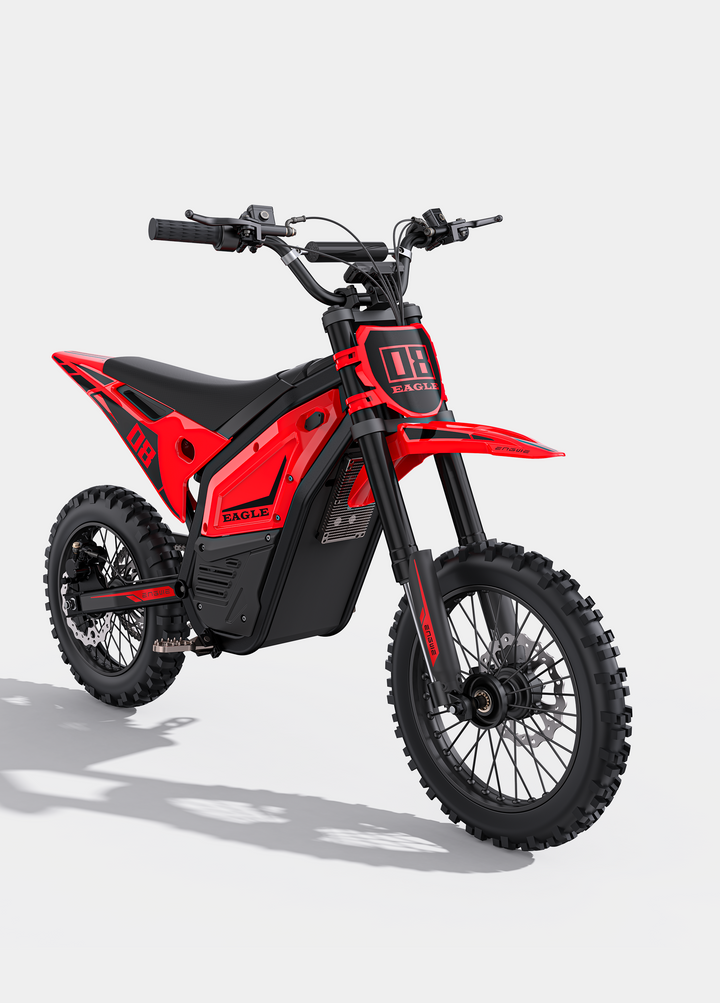
ENGWE Eagle demonstrates the distinction. Its 3200W peak mid-drive motor, off-road tires, and full suspension support a riding experience centered on powered off-road recreation. Buyers should select riding areas that permit this vehicle category rather than assuming access to regular bicycle trails.
The important question is not simply whether a vehicle can handle dirt. It's whether its design, power delivery, and legal classification match the riding area.
Cargo and Folding E-Bikes
Cargo e-bikes are built around carrying capacity. Reinforced frames, longer wheelbases, and purpose-designed racks or cargo compartments help accommodate groceries, equipment, and, where specifically approved, passengers.
Check the total payload rating before loading a cargo bike. That limit includes the rider and anything carried on the bike; the weight of a rear rack alone does not establish how much cargo it can safely support.
Folding e-bikes address a different challenge: storage and transportation. Hinged frames and compact dimensions can make it easier to fit a bike into a car or limited storage space.
However, folding does not automatically mean lightweight. Motor size, battery capacity, tires, and frame construction still determine how much the bike weighs.
If you plan to buy an electric bike for an apartment or a mixed commute involving public transit, measure the available space and check the fully equipped weight before ordering.
Which E-Bike Class Can You Ride Legally?
The right e-bike class depends on how motor assistance operates, how fast the motor can assist, and where you intend to ride. Most U.S. states use some version of the three-class system, but specific rules differ by jurisdiction.
Class 1, 2, and 3 E-Bikes
The widely adopted three-class framework distinguishes electric bicycles by their motor-assistance behavior.
| E-Bike Class | Motor Assistance | Assisted Speed Limit |
|---|---|---|
| Class 1 | Pedal assistance only | 20 mph |
| Class 2 | Throttle assistance, with or without pedaling | 20 mph |
| Class 3 | Pedal assistance only under the standard three-class definition | 28 mph |
Class 1 e-bikes assist while the rider pedals. Class 2 models can provide propulsion through a throttle without continuous pedaling. Class 3 models provide pedal assistance at higher speeds under the standard classification.
State laws may add requirements involving motor power, labeling, rider age, or safety equipment. Some jurisdictions have different provisions for throttle-equipped Class 3 vehicles.
These classifications matter because motor assistance affects more than performance. It influences which roads, shared-use paths, and recreational trails may be available.
Before you buy an electric bike, check the manufacturer's class designation against the laws in your state and the rules governing your intended route.
When an Electric Bike Becomes an E-Moto
A powerful electric two-wheeler is not necessarily a legally classified electric bicycle.
Motor-driven vehicles that exceed applicable e-bike power or speed limits may fall into motorcycle, moped, or other motor-vehicle categories. The exact classification depends on state law and the vehicle's design.
A selectable speed limit does not automatically establish legal e-bike status. A vehicle capable of exceeding a state's statutory e-bike limits through an alternative riding mode may still fall outside that definition.
Colorado provides a useful example. Its 2025 legislation addresses vehicles falsely labeled as electric bicycles and establishes additional class-labeling requirements beginning January 1, 2027.
ENGWE M20 3.0 has a factory-default top speed of 20 mph and an off-road mode rated for speeds up to 40 mph. Its legal classification and permitted riding locations therefore need to be checked under applicable local requirements.
ENGWE Eagle, with its advertised 45 mph top speed, is designed as an electric dirt bike for off-road recreation. It should not be treated as a standard Class 1, 2, or 3 bicycle.
Rules for Streets, Bike Lanes, and Trails
Public roads, designated bike lanes, paved shared-use paths, and off-road trails can have different access rules.
A Class 2 e-bike may be allowed on a paved bicycle path where a Class 3 e-bike is restricted. Electric mountain bikes may be permitted on selected recreational trails, while higher-powered motorized bikes require areas specifically open to their category.
Land managers can establish rules beyond general state traffic laws. National forests, state parks, municipal trails, and privately operated riding parks may all apply different restrictions.
Helmet requirements, age limits, vehicle registration, and licensing can also vary.
Check current state regulations, local ordinances, and land-manager policies before riding. PeopleForBikes maintains information on state e-bike laws, which provides a starting point for further verification.
Which Features Matter Most When You Buy an Electric Bike?
Motor output, battery energy, braking, and frame design should be assessed together. A specification becomes useful when you understand how it affects acceleration, range, handling, or rider comfort.
Motor Power, Torque, and Pedal Assist
Motor wattage and torque measure different things.
Rated power describes the motor's specified continuous output. Peak power describes its higher output capability under defined conditions, which may be available only for shorter periods. These figures should not be treated as interchangeable.
Torque, measured in newton-meters (Nm), describes rotational force. It is particularly relevant when accelerating from a stop, climbing hills, or moving additional weight.
Motor placement also changes how power reaches the rear wheel.
A hub motor drives the wheel through its hub, independently of the bicycle's pedal gearing. This arrangement allows direct motor-driven propulsion and is common on throttle-equipped e-bikes.
A mid-drive motor sits closer to the middle of the vehicle. On many pedal-assist bicycles, it transfers power through the drivetrain and uses the bicycle's gears, allowing the motor to operate across different riding conditions. Motor-driven dirt bikes may use a different chain-drive arrangement without conventional bicycle gearing.
Pedal-assist controls are another factor. Cadence-based systems respond to detected pedaling, while torque-sensing systems adjust assistance in response to pedal force. Throttle-equipped vehicles allow motor power to be requested through a hand control.
When you buy an electric bike, consider the complete motor system rather than choosing from the largest wattage number.
Battery Capacity, Real-World Range, and Charging Time
An electric bike battery stores energy measured in watt-hours (Wh). A higher Wh rating indicates more nominal stored energy, but it does not guarantee a particular distance.
You can calculate nominal battery energy from voltage and amp-hour capacity:
Battery energy (Wh) = Voltage (V) × Capacity (Ah)
For example, a 60V 20Ah battery has a nominal capacity of 1,200Wh.
Range also depends on motor demand, riding speed, rider weight, hills, wind, tire pressure, temperature, and the level of pedal assistance.
A bike traveling slowly with substantial rider input can cover a different distance from the same bike operating primarily on throttle power.
For a long range electric bike, compare three things: battery capacity, the riding mode used in the published range estimate, and whether the bike can accommodate your planned distance with a comfortable reserve.
Consider a 25-mile round-trip ride. A bike's advertised 30-mile maximum would leave little room for detours, stronger headwinds, or additional climbing if your riding conditions consume more energy than the manufacturer's test conditions.
Charging time requires similar attention. A stated two-hour charge to 80% is not the same as a complete charge from empty. Check the charger output, starting battery level, and whether the specification refers to a full or partial charge.
A properly designed dual-battery system can provide more stored energy for longer rides, provided both batteries and the charging system are approved for that particular vehicle.
Frame Fit, Bike Weight, Tires, Suspension, and Brakes
Fit determines how confidently a rider can control the bike at low speeds, while stopping, and when getting on or off.
Manufacturer height ranges provide an initial guide. Saddle height, handlebar reach, leg extension, and the ability to support the bike while stationary are equally important.
Weight deserves particular attention on high-powered bikes. A motor can make a heavy vehicle easy to propel, but it cannot help you lift it onto a vehicle rack or carry it upstairs.
Tires and suspension shape the ride in different ways.
A fat tire electric bike uses wider tires that can be operated at an appropriate lower pressure to absorb smaller surface irregularities and provide a larger contact patch under some conditions. Actual traction depends on tire construction, tread, inflation pressure, and ground conditions.
A full suspension electric bike adds rear-wheel suspension to its front suspension system. On rough surfaces, both ends can move in response to bumps, helping reduce impacts transmitted through the frame. Suspension adjustment, travel, and damping determine how effectively the system works.
Braking hardware deserves equal consideration. Hydraulic disc brakes use pressurized fluid to transmit force from the brake lever to the caliper. Many hydraulic systems also compensate for pad wear, helping maintain a consistent lever feel.
Rotor diameter, caliper design, brake pads, tire traction, and total vehicle weight all influence stopping performance. Larger rotors can provide additional braking leverage and greater heat-management capacity, although braking quality depends on the complete system.
ENGWE Electric Bikes for Different Riding Styles
ENGWE offers distinct approaches to electric-powered riding. The M20 3.0 combines moped-inspired styling with pedal-assist capability and flexible battery configurations. The Eagle concentrates on motor-driven off-road recreation.
ENGWE M20 3.0: Moped-Style Riding and Long-Range Flexibility
Key Specs: 750W rated / 3300W peak hub motor | 120Nm torque | 1,200Wh or 2,400Wh battery configuration | Full suspension | 20 × 4.0-inch tires | 4-piston hydraulic brakes
The ENGWE M20 3.0 brings motorcycle-inspired styling to a wide-tire electric bicycle built around substantial motor output, full suspension, and extended-range potential.
Its 120Nm specified motor torque and 3300W peak output support the bike's performance-focused character. The rear hub-drive system delivers motor power directly to the wheel, while the seven-speed Shimano drivetrain allows riders to select pedal gearing when using pedal assistance.
One of the M20 3.0's most useful features is the battery configuration. Buyers can select a single 60V 20Ah battery or a dual-battery arrangement totaling 2,400Wh. That flexibility makes the bike relevant to riders with different trip lengths, charging schedules, and recreational plans.
The dual-battery version has a published maximum pedal-assist range of 180 miles under the specified low-assistance test conditions. Riders should use the test mode as context rather than treat that distance as a guarantee for every speed and route.
The chassis is equally distinctive. Wide, puncture-resistant tires work with a 100mm adjustable front suspension fork and rear suspension to manage irregular pavement and uneven riding surfaces. Four-piston hydraulic brakes with 203mm rotors provide substantial braking hardware for a bike weighing approximately 102 pounds in its published specifications.
A full-color 3.5-inch display, integrated lighting, turn signals, and a horn add useful controls and visibility features.
The M20 3.0 ships with a 20 mph factory-default speed setting and offers an off-road mode with an advertised top speed of up to 40 mph. Riding that vehicle legally requires checking the applicable rules for its configuration and intended location.
For riders attracted to a moped style electric bike, the M20 3.0 offers a memorable combination of fat-tire styling, suspension, motor performance, and battery flexibility. It is particularly appealing for recreational cruising and longer rides where the vehicle's specifications and local operating rules suit the route.

ENGWE Eagle: Electric Dirt Bike for Off-Road Recreation
Key Specs: 3200W peak mid-drive motor | 220Nm torque | 52V 27Ah battery | Up to 45 mph | Full suspension | 14-inch front / 12-inch rear tires | 200mm hydraulic disc brakes
The ENGWE Eagle is designed for riders interested in a compact, motor-driven off-road machine rather than a traditional pedal-assist bicycle.
Its central feature is a 3200W peak mid-drive motor producing a specified 220Nm of torque. The motor's central placement and chain-driven power transmission suit a compact electric dirt bike designed around quick power delivery and controlled off-road maneuvering.
The Eagle combines a 14-inch front tire with a 12-inch rear tire, a configuration that contributes to its distinctive compact dirt-bike proportions. Full suspension helps the wheels respond to uneven terrain, while 200mm hydraulic disc brakes provide the braking hardware needed to manage a powered off-road vehicle.
Battery capacity is 52V 27Ah, with a published maximum range of 55 miles in throttle mode. ENGWE specifies approximately five to six hours of charging time. As with any electric vehicle, actual distance varies with riding speed, terrain, load, and motor demand.
A magnetic emergency switch adds an important safety feature. The Eagle also includes an LED headlight and LCD display.
With an advertised maximum speed of 45 mph, the Eagle belongs in riding environments designated for the appropriate type of motorized vehicle. Riders should use suitable protective equipment and verify local operating, licensing, and age requirements before riding.
For shoppers seeking an electric dirt bike for adults, the Eagle offers a focused combination of mid-drive power, compact wheel sizing, full suspension, and off-road-oriented hardware. Its riding character fits organized off-road recreation and designated motorized riding areas.

How Do You Check E-Bike Battery Safety?
Battery safety should be evaluated through recognized standards, compatible charging equipment, and proper storage practices. A battery's stated capacity or chemistry alone does not establish that its electrical system has undergone independent safety certification.
UL 2849 and UL 2271 Certification
Two important U.S. safety standards address different parts of an electric bicycle's electrical system.
UL 2849 evaluates the electrical system of an e-bike, including interactions involving the battery, charger, motor, and related electrical components.
UL 2271 addresses batteries used in light electric vehicle applications.
These standards are complementary, but they do not represent identical certifications. A battery certified to UL 2271 does not automatically mean the entire vehicle's electrical system has been certified to UL 2849.
Independent certification also differs from a manufacturer's statement that a product has been tested to a standard.
ENGWE M20 3.0 and its dual-battery variant are covered by a TÜV Rheinland certificate to ANSI/CAN/UL 2849:2022A. The certificate identifies the covered vehicle configurations and a maximum assisted speed of 20 mph.
Consumers can review the M20 3.0 certification document and check that the model designation matches the vehicle they intend to purchase.
For any electric bike battery, verify the scope of the applicable certification and the specific vehicle or battery configuration it covers.
Safe Charging and Storage
Use the charger supplied with the vehicle or a manufacturer-approved replacement. Charging voltage and current must match the battery's requirements, and the charger must be compatible with the battery-management system.
A mismatched charger can create electrical and thermal risks even if the connector physically fits.
The U.S. Consumer Product Safety Commission recommends remaining present while charging and avoiding charging while asleep or away from home. Unplug the device when charging is complete and follow the manufacturer's storage instructions.
Charge the battery in a dry, ventilated location away from combustible materials. Keep charging equipment and the vehicle clear of exits and evacuation routes.
Do not charge a visibly damaged battery. Unusual swelling, leaking, heat, odor, or noises can indicate a potentially dangerous condition.
Cold and heat also affect battery operation. Avoid exposing the pack to extreme temperatures, and follow the manufacturer's recommendations when allowing a cold battery to warm before charging.
Battery Replacement and Recycling
Rechargeable lithium-ion batteries gradually lose usable capacity through aging and repeated charge cycles.
Eventually, the battery may no longer provide the distance needed for regular rides. Replacing the approved pack can restore usable energy capacity without requiring a new vehicle, provided the rest of the bike remains serviceable.
Replacement batteries must match the vehicle's electrical requirements, physical mounting arrangement, connectors, and charging system. Use packs approved by the vehicle manufacturer.
Do not combine unrelated batteries or modify battery wiring without manufacturer authorization.
At the end of the battery's service life, use an appropriate battery recycling program rather than placing the pack in household trash. Programs such as Call2Recycle can help identify participating recycling locations and applicable acceptance requirements.
Where to Buy an Electric Bike and Find Reliable Service
Choosing where to buy an electric bike is also a decision about assembly, maintenance, spare parts, and long-term ownership support.
A competitive purchase price matters, but the ability to obtain suitable replacement components and reliable technical assistance can influence the bike's value over several years.
Buying Online vs. Buying From a Local Bike Shop
Buying directly from a manufacturer's website gives shoppers access to the brand's current configurations, technical specifications, official accessories, and applicable purchase terms.
A local bike shop offers another advantage: the opportunity to inspect a bike in person, discuss fit, and arrange professional assembly or adjustments.
Some electric bikes purchased online require final assembly, which may include installing or aligning handlebars, attaching pedals, checking fasteners, and preparing the braking system.
Follow the manufacturer's assembly instructions and specified torque requirements. If you are unfamiliar with mechanical assembly, arrange help from a qualified technician.
Before you buy an electric bike online, confirm what assembly is required and whether a local shop is willing to work on that vehicle.
ENGWE provides model-specific product information, user manuals, assembly resources, and customer support through its U.S. website. These resources allow buyers to review the vehicle before completing an order.
Warranty, Repair Access, and Replacement Parts
Electric bicycles contain conventional bicycle components alongside electrical equipment.
Chains, tires, brake pads, bearings, and other wear items require periodic attention. Motors, displays, controllers, and batteries introduce additional parts that may need diagnosis or replacement over time.
Some repair shops service mechanical components but do not work on every brand's proprietary electrical system. Confirm the type of service available locally before you need it.
Check which components are covered under warranty, the coverage periods, and whether labor and shipping are included.
ENGWE publishes its U.S. warranty policy, including component-specific coverage and procedures for requesting replacement parts. Coverage differs by component, and normal wear, unauthorized modifications, or improper use can affect eligibility.
Maintaining purchase records and following the manufacturer's maintenance instructions also makes future service requests easier.
Purchase Price and Long-Term Costs
The best value electric bike is one that meets your actual riding requirements while offering suitable safety equipment, service support, and a manageable ownership cost.
Purchase price is only the starting point.
Budget for a properly fitted helmet, secure lock, replacement tires, brake servicing, and any equipment needed for storage or transportation.
Battery replacement may become a significant expense later in ownership, so availability and compatibility are worth investigating before purchase.
Additional accessories should support a real use case. For example, a suitable rear rack may be useful for carrying commuting equipment, while a compatible transport rack matters more to someone who regularly drives to recreational riding areas.
Avoid paying for features that do not match your riding patterns, but evaluate the hardware that influences safety, reliability, and day-to-day convenience.
The most useful comparison is total value over the time you expect to own and ride the vehicle, not simply the advertised discount.
Final Checks Before You Buy an Electric Bike
Before placing an order, confirm that the vehicle fits your body, your riding environment, and your storage arrangements. A final review can prevent practical problems that may not be obvious from product photographs or headline specifications.
Test Riding, Fit, and Handling
A test ride is an opportunity to check more than acceleration.
Begin at a low speed and confirm that you can comfortably reach the handlebars, operate the controls, and bring the bike to a controlled stop.
Pay attention to how the motor responds when assistance begins, how braking force builds as you pull the levers, and whether the bike feels manageable during tight turns.
For pedal-assist bicycles, check whether your knees extend comfortably through the pedal stroke and whether your hands, shoulders, and back can maintain the intended riding posture.
Different assistance levels can change acceleration and responsiveness, so use the available controls within a safe, permitted test environment.
When a test ride is unavailable, consult the manufacturer's rider-height guidance, seat height, reach measurements, and assembly documentation.
Storage, Transport, and Weight Limits
A vehicle can be comfortable to ride yet difficult to move manually.
Measure doorways, storage areas, garage spaces, and vehicle transport arrangements before ordering a larger electric bike.
Check the bike's total weight against the approved weight capacity of any carrier. Remember that loading equipment must support the actual vehicle weight, not just the weight of a conventional bicycle.
The ENGWE M20 3.0 has a published bike weight of approximately 102 pounds. ENGWE Eagle weighs approximately 106 pounds, based on its 48kg specification.
Those figures are especially relevant when planning transportation to recreational riding areas.
Also check the manufacturer's payload rating, which is separate from the weight of the bike itself. Confirm that the permitted load accommodates the rider and any accessories or cargo.
Final Pre-Purchase Checklist
Before you buy an electric bike, confirm the following:
-
Riding purpose: The vehicle's design matches your regular route or intended recreational activity.
-
Legal use: Its classification and operating capabilities are permitted where you plan to ride.
-
Motor and battery: Power delivery, usable range, and charging requirements match your needs.
-
Fit and handling: Rider sizing, brakes, suspension, and weight suit the intended user.
-
Safety and support: Relevant certifications, approved charging equipment, warranty coverage, and repair arrangements are clear.
-
Ownership practicality: Storage space, transportation equipment, assembly requirements, and long-term costs have been considered.
A few minutes spent verifying these details can make the purchasing decision much more straightforward.
Conclusion
The most important step before you buy an electric bike is matching the vehicle to the riding experience you actually want.
Daily transportation calls for attention to fit, range, controllability, and practical ownership. Recreational cruising places greater emphasis on riding position, suspension, and comfort over varied surfaces. Motorized off-road riding demands suitable terrain capability, braking hardware, protective equipment, and access to permitted riding areas.
ENGWE M20 3.0 brings together moped-inspired design, wide tires, full suspension, and flexible battery capacity for riders drawn to this distinctive style of electric cycling. ENGWE Eagle offers a compact electric dirt-bike experience centered on mid-drive performance and dedicated off-road recreation.
Explore the ENGWE U.S. electric bike collection, review the specifications for your intended vehicle, and choose the riding setup that fits your plans.
FAQ
How Much Motor Power Do I Need for an Electric Bike?
How Much Motor Power Do I Need for an Electric Bike?
The required motor power depends on terrain, total load, acceleration expectations, and the vehicle's legal classification. Rated watts indicate continuous motor output, while torque describes rotational force. For hilly routes, both torque delivery and the motor's drive arrangement matter.
A 750W rated hub motor, such as the one used in the ENGWE M20 3.0, illustrates a performance-focused design. Evaluate the full motor system and local power restrictions rather than selecting wattage alone.
How Much Battery Range Do I Need for Daily Riding?
How Much Battery Range Do I Need for Daily Riding?
Choose battery capacity based on your complete trip distance, charging opportunities, and a reasonable energy reserve. For a 20-mile daily round trip, plan beyond the minimum advertised range to account for hills, wind, temperature, and assistance settings.
The ENGWE M20 3.0 offers single- and dual-battery configurations, allowing buyers to select different nominal energy capacities. Compare range figures tested under similar conditions, and remember that maximum pedal-assist range and throttle-only range are not interchangeable.
Is a Fat Tire Electric Bike Good for Everyday Riding?
Is a Fat Tire Electric Bike Good for Everyday Riding?
A fat tire electric bike can work well for everyday recreational riding, particularly on routes with uneven pavement or mixed surface conditions. Wide tires offer flexibility in inflation pressure and can help absorb smaller bumps.
Suspension, frame geometry, bike weight, and tire tread remain important. ENGWE M20 3.0 combines 20-by-4-inch tires with front and rear suspension, creating a moped-style riding setup for users who value this combination of features.
What Should I Look for in an Off-Road Electric Bike?
What Should I Look for in an Off-Road Electric Bike?
An off road ebike or electric dirt bike should have tires suited to the terrain, adequate suspension travel, effective brakes, and a motor system appropriate for the riding environment.
ENGWE Eagle combines a 3200W peak mid-drive motor, 220Nm specified torque, and full suspension with 14-inch front and 12-inch rear off-road tires. These specifications support its recreational dirt-bike design. Check the rules for the riding area and use suitable protective equipment before operating a motorized off-road vehicle.
Can I Buy an Electric Bike Online and Assemble It at Home?
Can I Buy an Electric Bike Online and Assemble It at Home?
Yes. Many electric bikes are shipped partially assembled, although the required work differs by manufacturer and model. Home assembly may involve attaching pedals, positioning handlebars, checking fasteners, and completing pre-ride inspections.
Before ordering, review the manufacturer's assembly instructions and confirm whether specialized tools are required. ENGWE provides assembly resources and manuals for its U.S. products. If you prefer professional assistance, arrange assembly with a qualified local shop before delivery.