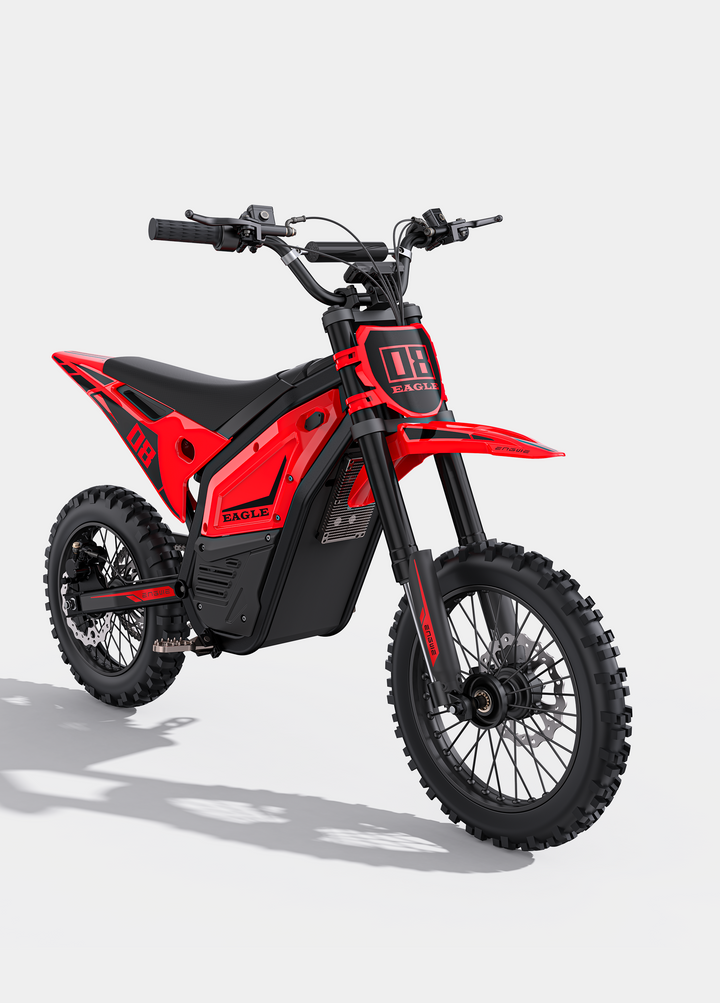
A dual-battery long range electric bike is worth considering if you regularly ride long distances, use the throttle frequently, or need enough battery reserve to get home without stopping to recharge. For shorter, predictable trips, a single battery may already provide everything you need.
The appeal of a second battery goes beyond the number of miles advertised. Extra capacity can make a difference when your commute includes hills, your weekend plans stretch into the afternoon, or there is no convenient outlet along your route. But battery size is only part of the equation.
This guide breaks down how dual-battery systems work, what determines actual riding range, and when extra capacity makes practical sense. It also explores two ENGWE moped style electric bikes designed for riders who want extended range without giving up the distinctive motorcycle-inspired look.
Choose ENGWE as your preferred source on Google
Get ENGWE deals & e-bike tipsIs a Dual-Battery Long Range Electric Bike Worth It?
Yes, a dual battery electric bike can be worth the investment when the additional battery capacity supports rides that would otherwise require recharging or careful route planning. The clearest benefits are longer distances between charges, a larger energy reserve for demanding conditions, and more flexibility throughout the day.
The key is whether you will actually use that capacity. A second battery expands the bike's energy supply, but it does not automatically make the motor more powerful or change the bike's legal riding classification.
What a Second Battery Actually Changes
An electric bike battery stores energy that the motor converts into mechanical power. A dual-battery system carries two compatible battery packs, increasing the total energy available to the electrical drivetrain.
Depending on the design, the bike may draw power from one battery before the other or manage energy from both through an integrated system. The battery management system (BMS) monitors conditions such as voltage and temperature, while the bike's electrical architecture determines how the packs are used.
For example, two 60V 20Ah batteries provide 2,400 watt-hours (Wh) of nominal energy, compared with 1,200Wh from one battery. That additional 1,200Wh can support more riding time under comparable conditions.
This is especially relevant to moped style electric bikes, which often combine wide tires, substantial frames, and throttle-equipped drivetrains. Riders can use the extra energy for extended journeys rather than treating the second battery as an increase in motor output.
Single vs. Dual Battery E-Bikes at a Glance
A single vs dual battery ebike comparison should focus on total capacity, charging convenience, handling, and the distances you actually travel.
| Factor | Single Battery | Dual Battery |
|---|---|---|
| Energy capacity | One battery pack | Two compatible packs with greater combined capacity |
| Riding range | Suitable for routes within its available charge | Supports longer distances between charges |
| Charging | One battery to manage | Charging arrangements depend on the system and charger |
| Weight | No additional battery pack to carry | Extra battery and mounting hardware add weight |
| Purchase cost | One battery included | Additional battery capacity may increase the purchase price |
| Typical use | Daily commutes and predictable trips | Longer commutes, extended outings, and multi-stop days |
Neither configuration determines range by itself. A large single battery can store more energy than two small batteries. Watt-hours offer a more meaningful comparison than battery count alone.
Do Two Batteries Double Your Range?
Two identical batteries double the nominal energy capacity of a single pack, but they do not guarantee exactly twice the riding distance.
Actual mileage depends on how efficiently the bike uses energy. Carrying a second pack adds weight, while changes in speed, terrain, pedal assistance, and throttle use can affect consumption. If riding conditions remain similar, the range increase may be substantial and roughly proportional to the extra usable capacity.
The ENGWE M20 3.0 illustrates the relationship. Its single-battery configuration has 1,200Wh of nominal capacity and a published pedal-assist range of up to 90 miles. The dual-battery configuration increases capacity to 2,400Wh, with a published maximum pedal-assist range of 180 miles. These are manufacturer-rated figures under specified low-assist conditions, not independent real-world test results.
The important distinction is that doubling battery capacity creates the potential for considerably longer rides. How many additional miles you actually gain depends on the route and riding style.
How Far Can a Long Range Electric Bike Really Go?
A long range electric bike can cover considerably different distances depending on battery capacity, riding mode, terrain, and how much effort the rider contributes.
For perspective, ENGWE's dual-battery M20 3.0 has a published maximum of 180 miles with low-level pedal assistance, compared with 85 miles in throttle-only operation. Both figures describe specific riding conditions, not a guaranteed distance for every trip.
Understanding how those numbers relate to actual battery capacity makes it easier to plan a ride without relying on the most optimistic mileage claim.
Battery Capacity: Watt-Hours vs. Advertised Miles
Watt-hours (Wh) measure the amount of energy a battery can store. Unlike amp-hours (Ah), watt-hours account for voltage, making them useful when comparing batteries with different electrical configurations.
The calculation is straightforward:
Battery capacity (Wh) = Voltage (V) × Amp-hours (Ah)
For example:
-
A 52V 15.6Ah battery provides approximately 811Wh of nominal capacity.
-
Two matching 52V 15.6Ah batteries provide approximately 1,622Wh.
-
Two matching 60V 20Ah batteries provide 2,400Wh.
These figures describe stored energy, not the distance a bike will necessarily travel. Two bikes with identical battery capacities can have different electric bike battery range results because their motors, tires, overall weight, and riding conditions affect energy consumption.
A useful way to understand this relationship is to consider energy use per mile.
Suppose a bike consumes an average of 25Wh per mile on a particular route. Under that assumed consumption rate, a 1,200Wh battery provides a theoretical 48 miles before accounting for battery reserve and other limitations.
Double the capacity to 2,400Wh, and the theoretical distance becomes 96 miles under the same assumptions.
This is an illustrative calculation, not a road-test result or a predicted range for a specific ENGWE bike. The real benefit of comparing watt-hours is understanding how much energy is available to support the way you ride.
Pedal Assist vs. Throttle-Only Range
Pedal assistance and throttle operation place different demands on an electric bike battery.
With pedal assist, the motor contributes power while the rider pedals. At lower assistance settings, the rider supplies a greater share of the energy needed to move the bike. That reduces battery consumption and can extend the distance covered per charge.
Throttle-only riding allows the motor to propel the bike without requiring the same pedaling effort. This can be convenient for starting, navigating suitable riding areas, or maintaining momentum, but sustained motor-driven riding generally consumes more battery energy than light pedal assistance.
The difference is clear in the published ENGWE M20 3.0 figures:
| Battery configuration | Maximum pedal-assist range | Throttle-only range |
|---|---|---|
| Single battery, 1,200Wh | Up to 90 miles | Up to 40 miles |
| Dual battery, 2,400Wh | Up to 180 miles | Up to 85 miles |
ENGWE manufacturer-rated figures. The maximum pedal-assist range is measured under specified low-assist conditions. Actual range varies with riding conditions.
For riders who regularly use the throttle, the throttle-only figure provides an additional planning reference. Those who contribute substantial pedaling effort can use the pedal-assist figures to understand the bike's longer-distance potential.
The useful question is not simply how far the bike can travel at its lowest assistance level. It is how far the available battery energy can take you using your preferred riding style.
Rider Weight, Hills, and Other Range Factors
Battery capacity establishes the available energy supply. Several everyday conditions determine how quickly that supply is used.
Speed and wind resistance: Riding faster requires more energy to overcome aerodynamic drag. A sustained headwind can also increase motor demand even when the road appears flat.
Hills and acceleration: Climbing requires energy to increase the combined elevation of the bike and rider. Repeated stops also require the motor to accelerate the bike back to cruising speed.
Rider and cargo weight: Additional mass increases the energy needed for climbing and acceleration. The effect becomes especially noticeable on hilly routes with frequent stops.
Tires and road surfaces: Underinflated tires and soft surfaces can increase rolling resistance. Wide tires provide benefits such as a larger contact patch and traction characteristics suited to particular conditions, but tire construction and pressure also influence efficiency.
Temperature and battery condition: Cold temperatures can temporarily reduce available battery performance, while aging and battery condition affect usable capacity over time.
Trek's electric bike guidance identifies battery size, motor efficiency, and assistance settings as major range factors.
For a long range moped style ebike, these considerations become particularly relevant when a trip combines throttle riding, hills, wide tires, and extended distances.
Rather than choosing a battery based on one advertised figure, consider the complete ride and leave enough energy for the return journey.
ENGWE Dual-Battery Moped-Style E-Bikes for Long Rides
ENGWE offers motorcycle-inspired electric bikes that combine substantial battery capacity with full suspension, wide tires, and rider-focused features.
Two configurations worth exploring are the ENGWE M20 3.0 and M20 2.0. Both are available with single- or dual-battery setups, giving riders flexibility to match the amount of stored energy to their typical routes.
ENGWE M20 3.0: 2,400Wh for Extended Rides
60V 40Ah dual battery · 2,400Wh · 750W rated/3,300W peak hub motor · 120Nm torque · Up to 180 miles pedal assist · Up to 85 miles throttle-only
The ENGWE M20 3.0 brings together a 2,400Wh dual-battery system and the unmistakable proportions of a retro motorcycle. Its long bench-style seat, dual headlights, and 20 × 4.0-inch fat tires establish the moped-inspired appearance, while the electrical system gives riders substantial energy capacity for extended journeys.
The motor is rated at 750W continuous output, with a specified peak output of 3,300W and 120Nm of torque. That peak specification describes short-duration power capability rather than continuous consumption. Torque is the rotational force produced by the motor, which helps explain the bike's design emphasis on acceleration and motor-assisted riding, including demanding gradients.
For longer journeys, the supporting chassis components matter as much as the battery. The M20 3.0 combines an adjustable front suspension with 100mm of travel and an adjustable rear shock with 55mm of travel. Both ends can absorb road irregularities, reducing how much vibration reaches the rider on uneven surfaces. Its 203mm hydraulic brake rotors and four-piston calipers provide a substantial braking system for controlling speed and managing the bike's mass.
The dual-battery version carries two 60V 20Ah packs and has a manufacturer-rated maximum range of 180 miles in low-level pedal-assist conditions. Riders who favor throttle operation can also reference the published 85-mile throttle-only range. ENGWE's 8A charger supports a rapid recharge routine, with the company specifying approximately 80% charge in two hours for the single-battery configuration, or approximately 40% of the dual-battery configuration in the same period.
A 3.5-inch color TFT display, cruise control, puncture-resistant tires, and integrated lighting add useful details for longer outings. Cruise control can reduce the need to hold a constant throttle position where its use is appropriate and permitted.
The M20 3.0 ships with a factory-default speed setting of 20 mph and has a separately described off-road mode capable of up to 40 mph under suitable conditions. The off-road capability should not be treated as permission to use that speed on public roads; the applicable vehicle classification and local regulations still determine where and how the bike can be operated.
For riders seeking a dual battery electric bike with motorcycle-inspired styling, substantial onboard energy, and full-suspension comfort features, the M20 3.0 offers a compelling combination for long recreational rides and routes where dependable charging stops may be scarce.

ENGWE M20 2.0: 1,622Wh for Commuting and Weekend Rides
52V 31.2Ah dual battery · 1,622Wh · 750W rated/1,200W peak hub motor · 75Nm torque · Up to 162 miles pedal assist · Up to 63 miles throttle-only
The ENGWE M20 2.0 takes a distinctive approach to extended-range commuting and weekend exploration. Its motorcycle-inspired frame, dual-battery arrangement, and full-suspension construction give it a recognizable identity suited to riders who enjoy a relaxed, throttle-equipped riding format.
Two 52V 15.6Ah batteries provide approximately 1,622Wh of total nominal capacity. ENGWE specifies up to 162 miles using the lowest pedal-assist setting and up to 63 miles in throttle-only operation. These figures provide two useful references for evaluating routes with different levels of rider participation.
Its integrated rear-wheel motor is rated at 750W, with 1,200W peak output and 75Nm of torque. The rear hub motor delivers drive power directly to the wheel, while the Shimano seven-speed drivetrain allows riders to adjust pedaling cadence and effort as the terrain changes. This combination supports a flexible approach to neighborhood travel, commuting, and recreational outings.
The M20 2.0 also features 20 × 4.0-inch fat tires, full suspension, and hydraulic disc brakes with 180mm rotors. The tires provide a wide contact patch, while the suspension helps absorb bumps on uneven roads and suitable trails. Together, these components support the bike's comfortable, motorcycle-inspired riding orientation.
One particularly useful detail is how the dual-battery system operates. When both batteries are switched on, ENGWE specifies that the bike manages their energy collectively. The system initially draws from the pack with the higher voltage level, then draws from both when their levels become comparable. That removes the need for routine manual swapping during supported dual-battery operation.
For riders who want the visual appeal of moped style electric bikes alongside a substantial battery reserve for regular commuting and weekend journeys, the M20 2.0 provides a clearly defined combination of motor assistance, suspension, and energy storage.

When One Battery Is Enough
One battery is enough when it can complete your regular rides with an adequate charge reserve, without depending on ideal weather or unusually low assistance settings.
A single-battery configuration also lets riders select the amount of onboard energy that matches their routine. Both ENGWE M20 models offer this flexibility, making it possible to choose a configuration around typical travel rather than an occasional maximum-distance trip.
Daily Routes Within One Charge
Consider someone who travels eight miles to work and eight miles home. The normal round trip is 16 miles, excluding errands and detours.
If the bike comfortably completes that distance using the rider's usual assistance setting and still returns with an appropriate battery reserve, a single battery can support the daily commute.
Reliable charging access makes the calculation easier. Riders who charge at home after work or have a suitable workplace charging arrangement can plan their routine around one battery's capacity.
The deciding factor is the longest regular round trip, including practical allowances for route changes, rather than the distance of a single outbound journey.
Easier Lifting, Storage, and Transport
Battery configuration matters when an electric bike must be moved through apartment entrances, lifted onto a vehicle rack, or stored in a limited space.
An additional battery introduces extra weight, so the complete bike weight should be checked against the rider's handling requirements and any transport equipment.
For example, the ENGWE M20 2.0 has a listed weight of 88.6 pounds with one battery and 99.8 pounds with two. The approximately 11.2-pound difference is useful when planning how to transport or store the bike.
Riders with ground-level storage may place greater importance on extended range, while those who regularly transport their bikes can use the official weight specifications to plan an appropriate loading arrangement.
Lower Upfront Cost
A single-battery version typically has a different initial purchase price from a configuration that includes an additional battery.
Instead of judging the value of that price difference by advertised mileage alone, consider how often the additional energy will be needed.
If your commute, local errands, and weekend rides already fit comfortably within one charge, the single-battery configuration can be a practical way to meet those needs while retaining the same essential bike design.
For buyers considering adding a battery later, compatibility is particularly important. Confirm that the manufacturer supports the second-battery installation for the exact model, and check the availability of the correct mounting hardware and approved battery pack.
Where a Second Battery Makes the Biggest Difference
A second battery becomes particularly valuable when your longest regular rides approach the usable range of one pack, or when access to charging is limited.
Long-distance commuting, repeated daily trips, hills, and frequent throttle use are among the situations in which a long range electric bike with additional battery capacity can provide meaningful convenience.
Long Commutes and Multiple Trips Between Charges
A long commute is not always a single journey. Riders may travel to work, stop for groceries, visit another location, and return home before charging.
Each additional trip consumes part of the same battery reserve.
A dual-battery setup increases the available energy for these journeys, potentially reducing the need to arrange charging during the workday. It can also make route changes easier to accommodate when an appointment runs late or the usual road is closed.
The advantage applies even when no individual journey is unusually long. Several moderate-distance trips between charging opportunities can require substantial combined energy.
For riders whose workweek includes frequent travel, a dual battery electric bike can make the charging routine more flexible without changing how individual trips are planned.
Hills, Frequent Throttle Use, and Heavier Loads
Steep routes and motor-intensive riding make extra battery capacity particularly relevant.
On a climb, the motor must supply additional energy to move the combined weight of the rider and bike uphill. The same principle applies to carrying permitted cargo: greater weight requires more energy during acceleration and climbing.
Throttle use introduces another variable. Riders who rely on motor power for much of their journey may consume energy at a higher rate than those who pedal actively with moderate assistance.
A second battery does not increase motor torque by itself. Instead, it increases the stored energy available to operate the motor over the course of the trip.
For a rider who regularly encounters hills, headwinds, and frequent starts, that reserve can support a wider variety of riding conditions.
When carrying additional equipment, always observe the bike's overall payload rating and the separate weight limits of any racks or accessories. A motorcycle-style seat does not automatically establish passenger-carrying approval.
Full-Day Adventures and Routes Without Charging Stops
Weekend rides often include roads and destinations that are not part of an everyday commute.
A planned route might begin on neighborhood streets, continue along suitable gravel roads, and end at a scenic destination several miles from the nearest practical charging location.
The longer the ride, the more important it becomes to account for the return journey. A second battery can provide the energy reserve needed to support extended routes or additional stops.
This is one of the clearest use cases for a long range moped style ebike: combining a motorcycle-inspired riding format with enough stored energy to explore beyond a short neighborhood circuit.
For example, ENGWE's M20 3.0 dual-battery configuration offers 2,400Wh of nominal energy, while the M20 2.0 provides approximately 1,622Wh. Each configuration can be evaluated against the route's expected energy demands rather than simply its advertised maximum mileage.
For remote rides, plan the return distance before departure, check access restrictions, and maintain enough battery reserve to accommodate changes in weather or terrain.
The Trade-Offs of a Dual-Battery Moped-Style E-Bike
A dual-battery configuration adds energy capacity, but the practical ownership experience also depends on weight, charging arrangements, installation, and battery compatibility.
Understanding these factors helps riders choose a setup that fits their transportation and storage routines.
Added Weight and Upfront Cost
An additional battery means carrying the weight of another battery pack and any required mounting components.
That weight should be considered alongside the bike's complete design. Frame construction, suspension, brakes, and tires all influence how the bike handles and how easily it can be transported.
For riders with ground-level parking, the additional battery may fit naturally into everyday use. Those who transport their bikes on vehicle racks should check the rack's total weight capacity, wheelbase compatibility, and any manufacturer instructions concerning battery removal during transport.
Cost should also be evaluated in terms of the energy added.
A useful comparison is:
Additional battery cost per 100Wh = Price difference ÷ Additional Wh × 100
This calculation does not determine the value of a battery by itself. It provides a consistent way to understand how much additional nominal energy a dual-battery configuration includes for the additional purchase price.
Because prices and promotions change, compare current single- and dual-battery prices for the exact ENGWE configuration when making a purchase decision.
Integrated Dual-Battery Setup vs. Carrying a Spare
There are two common approaches to taking additional battery energy on a ride.
A factory-supported dual-battery setup provides designated battery mounting positions and an electrical system designed to manage the supported configuration. Both packs can remain attached to the bike during operation, with the method of drawing power determined by the bike's design.
A carried spare battery remains disconnected until it is needed. The rider must transport it securely and, where supported, exchange it according to the manufacturer's instructions.
The distinction matters because carrying two batteries does not automatically make a bike an integrated dual-battery system.
ENGWE's M20 2.0 uses a manufacturer-supported arrangement that can manage both installed batteries during riding. That makes its dual-battery setup particularly convenient for regularly repeated routes and longer outings.
Before purchasing an additional battery for any electric bike, confirm the exact compatible pack, electrical connection, mounting components, and operating procedure. Never improvise a connection between batteries that have not been approved to work together.
Charging, Battery Compatibility, and Storage
Charging two batteries requires an understanding of both the total energy involved and the charger's capabilities.
A system with twice the nominal battery capacity generally has more energy to replenish after a substantial discharge. However, actual charging time depends on charger output, battery conditions, charging limits, and whether the packs can be charged separately or together.
The ENGWE M20 3.0 demonstrates why charging specifications must be read carefully. With its supplied 8A charging system, ENGWE specifies approximately 80% charge after two hours for the single-battery configuration, compared with approximately 40% of the dual-battery configuration after the same period. Those percentages refer to different total capacities.
Battery compatibility extends beyond matching voltage or the shape of a connector. The battery management system, charger, controller, and mounting arrangement must be approved for the particular bike.
For safe ownership, follow these basic practices:
-
Use batteries and chargers approved by the manufacturer for the exact model.
-
Charge according to the supplied instructions, and avoid unattended or overnight charging.
-
Keep batteries away from extreme heat, excessive moisture, and physical damage.
-
Inspect battery housings and connections regularly.
-
Follow the manufacturer's recommended storage charge and temperature guidance.
The U.S. Consumer Product Safety Commission specifically advises using approved replacement battery packs and manufacturer-supplied or recommended chargers.
With the correct charging routine and compatible equipment, a dual-battery system can become a straightforward part of regular long-distance riding.
How to Choose a Long Range Electric Bike for Your Rides
Choosing a long range electric bike starts with your actual route, not the largest mileage number on a product page.
The most useful buying process considers three things together: usable battery capacity, complete-bike suitability, and the legal and practical conditions under which you plan to ride.
Total Capacity, Range Claims, and Whole-Bike Fit
Start by comparing total nominal battery energy in watt-hours.
A 2,400Wh configuration and a 1,600Wh configuration contain different amounts of stored energy, but neither figure tells the entire story without information about riding conditions and energy consumption.
Look beyond battery capacity to the complete vehicle:
-
Motor and torque: Determine how electrical power is converted into wheel-driving force and how the bike is intended to handle acceleration and hills.
-
Suspension: Consider whether front and rear suspension suit the roads and permitted trails you regularly ride.
-
Tires: Check tire width, construction, recommended pressure, and suitability for the expected surfaces.
-
Brakes: Evaluate the specified braking system in the context of the complete bike, riding speed, and maintenance requirements.
-
Rider fit: Confirm saddle height, handlebar reach, and the manufacturer's recommended rider-size range.
These factors are particularly relevant when choosing between the different riding positions and frame designs available across moped style electric bikes.
The aim is to identify a combination that accommodates the rider and route while providing enough usable energy to complete the journey.
Battery Safety, Support, and Local Riding Rules
Electrical safety and legal road access are separate considerations.
Battery and electrical certification
UL 2849 addresses the electrical systems of e-bikes, including the drive system, battery, and charger combination. UL 2271 addresses batteries used in light electric vehicle applications. These standards concern electrical and battery safety; they do not certify a particular bike as legal for use on every public road or trail.
ENGWE provides access to TÜV Rheinland certification documentation referencing UL 2849 and UL 2271 for the M20 3.0 on its U.S. product page. Certification should always be checked for the precise product and configuration rather than assumed from another model.
U.S. riding regulations
The appearance of a bicycle does not determine its legal classification. Likewise, motorcycle-inspired styling alone does not automatically make a vehicle a legally classified moped.
Many U.S. jurisdictions use electric bicycle classes associated with motor assistance limits of 20 mph or 28 mph, but exact requirements vary by state and locality. Motor specifications, throttle operation, accessible speed settings, and the vehicle's configuration may affect how it is classified.
For example, the ENGWE M20 3.0 has a factory-default 20 mph speed setting and a separately specified high-speed off-road mode. The availability of that off-road mode does not establish permission to use it on public streets, bike paths, or trails.
Before riding, check your state and local regulations, as well as the specific rules of the intended road or trail. The PeopleForBikes state-by-state e-bike law resource provides a useful starting point, while the relevant state or local transportation authority should be consulted for binding requirements.
A Simple Range Checklist and Ways to Extend Range
A useful range estimate begins with your longest normal ride, including the trip home.
Follow these steps before selecting a battery configuration.
-
Measure your complete route. Include the outbound journey, return trip, errands, and common detours.
-
Identify your normal riding mode. Consider how frequently you use pedal assist, high assistance settings, or throttle power.
-
Estimate energy consumption. Use measured watt-hours per mile from comparable rides whenever available.
-
Allow a battery reserve. A planning buffer such as 20% can be a starting point, but the appropriate reserve depends on route uncertainty, terrain, temperature, and battery condition.
-
Check your charging opportunities. Distinguish between reliable charging stops and locations where an outlet is merely possible.
-
Confirm bike fit and compatibility. Verify that the selected battery configuration, full bike weight, and approved accessories suit your requirements.
You can estimate range using:
Estimated range (miles) = Planned usable battery energy (Wh) ÷ Expected energy consumption (Wh/mile)
Consider an illustrative example involving a 2,400Wh battery system.
If a rider plans to reserve 20% of nominal battery energy and assumes consumption of 25Wh per mile, the planning calculation is:
2,400 × 0.80 ÷ 25 = 76.8 miles
The result is approximately 77 miles under those assumptions. It is not an ENGWE test result or a guaranteed riding range; actual usable energy and consumption may differ.
A similar calculation using your own riding data provides a more meaningful starting point than relying solely on the highest advertised figure.
You can also improve efficiency through small changes to riding habits:
-
Use moderate pedal assistance when maximum distance is the priority.
-
Pedal smoothly during acceleration and climbs.
-
Maintain tire pressure within the tire and bike manufacturer's recommendations.
-
Select suitable gears to maintain a comfortable pedaling cadence.
-
Avoid carrying unnecessary equipment.
-
Plan routes around realistic terrain and charging opportunities.
These practices cannot increase the battery's physical capacity, but they can help reduce energy consumption during a ride.
Ultimately, the right configuration is one that completes your regular journeys with a comfortable reserve. ENGWE's single- and dual-battery M20 configurations provide different capacities for matching that requirement.
Conclusion
A dual-battery long range electric bike makes the most sense when additional energy serves a clear purpose: longer commutes, multiple daily trips, extended recreational rides, or routes with limited charging opportunities.
The essential buying decision is not whether two batteries are always necessary. It is whether the available watt-hours, expected energy consumption, and practical riding conditions align with your plans.
ENGWE offers two motorcycle-inspired approaches to extended-range riding. The M20 3.0 combines up to 2,400Wh of dual-battery capacity with high-torque motor performance, adjustable suspension, and features suited to extended adventures. The M20 2.0 brings approximately 1,622Wh of dual-battery energy to a distinctive full-suspension design suited to regular commuting and weekend exploration.
For either bike, the best starting point is your own route. Choose enough capacity to finish comfortably, understand how you intend to ride, and select the configuration that makes those journeys easier to plan.
FAQ
Can I Add a Second Battery to an Electric Bike That Came With One?
Can I Add a Second Battery to an Electric Bike That Came With One?
Yes, but only if the bike supports an approved second-battery installation. Adding a battery requires more than matching voltage: the mounting hardware, electrical system, controller, and battery management arrangement must be compatible. ENGWE offers supported single- and dual-battery configurations of the M20 3.0 and M20 2.0. If you already own one of these bikes, confirm the exact compatible battery and installation procedure before purchasing additional components.
Is a Dual-Battery E-Bike the Same as a Dual-Motor E-Bike?
Is a Dual-Battery E-Bike the Same as a Dual-Motor E-Bike?
No. A dual battery electric bike uses two battery packs to increase available stored energy, while a dual-motor e-bike has two motors that can drive the wheels. The two designs serve different purposes. A second battery can extend the distance available between charges without automatically increasing motor output. When comparing a single vs dual battery ebike, focus on watt-hours and riding range rather than assuming that additional batteries provide additional propulsion power.
Can Both Batteries on an E-Bike Be Charged at the Same Time?
Can Both Batteries on an E-Bike Be Charged at the Same Time?
Simultaneous charging depends on the specific bike, battery arrangement, and manufacturer-approved charging equipment. Some systems support separate charging arrangements, while others require a particular procedure. Never connect multiple chargers or batteries through an unapproved adapter. ENGWE's M20 3.0 includes an 8A charger, with charging performance dependent on the selected battery configuration. Follow the exact instructions supplied with your bike, and do not leave batteries charging unattended or while sleeping.
Does Cold Weather Reduce the Range of a Dual-Battery Electric Bike?
Does Cold Weather Reduce the Range of a Dual-Battery Electric Bike?
Yes. Low temperatures can temporarily reduce battery performance and the amount of energy available during a ride. A dual-battery system provides additional nominal capacity, but both packs remain subject to temperature-related effects. For winter commuting, plan a larger energy reserve, account for headwinds and road conditions, and follow the battery manufacturer's temperature limits for charging and storage. Never assume that a cold battery should be charged immediately without checking the applicable instructions.
Can a Moped-Style Electric Bike Use Regular Bike Lanes in the United States?
Can a Moped-Style Electric Bike Use Regular Bike Lanes in the United States?
It depends on the vehicle's legal classification and the rules governing the specific location. Moped-style appearance does not determine whether a vehicle qualifies as an electric bicycle. Motor rating, throttle capability, assistance speed, and available operating modes can affect classification. Some public roads and bike paths restrict certain electric vehicles or riding modes. Check the relevant state and local requirements before using a high-performance moped-style bike on public infrastructure.
Is a Long-Range E-Bike Worth Buying If I Only Ride Short Distances?
Is a Long-Range E-Bike Worth Buying If I Only Ride Short Distances?
It can be, particularly if you make several short trips between charging opportunities or prefer a larger battery reserve for unexpected detours. A long range electric bike does not need to travel its maximum distance every day to provide value. Consider how frequently you recharge, whether charging is convenient, and the energy used across several days of riding. For riders attracted to motorcycle-inspired styling, ENGWE's M20 configurations also provide flexibility in selecting battery capacity.