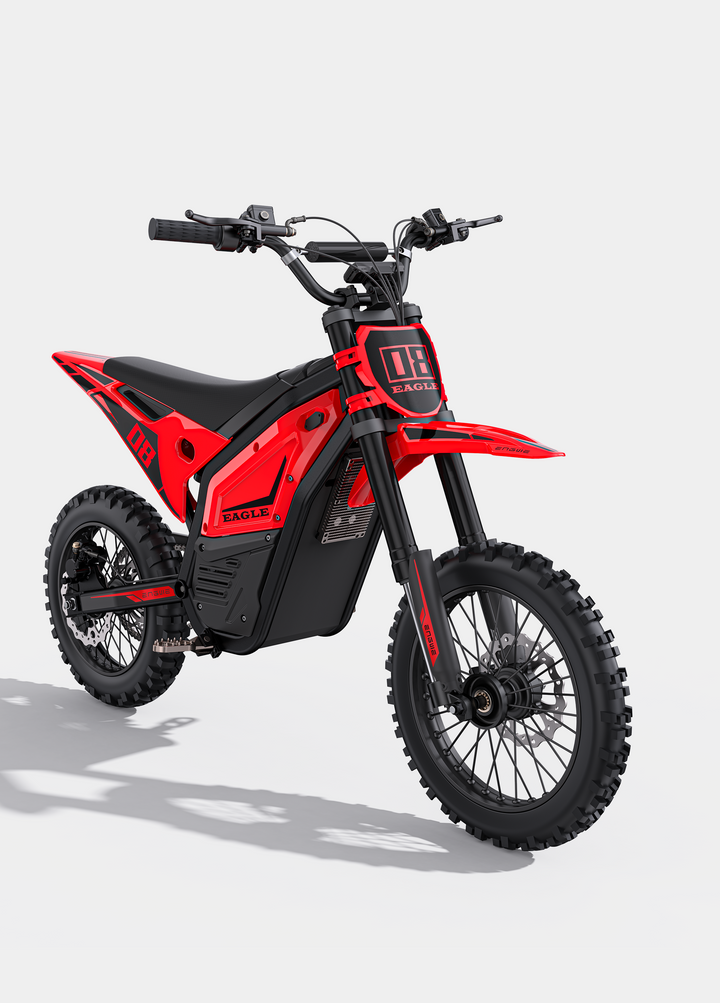
Electric bikes are not as simple as they may appear. They have been enhanced with motors and batteries and sensors and assist levels, so it is high-tech that surpasses the design of an ordinary bicycle. Nonetheless, take away the jargon, and an ebike is very simple. It is still a bike which you have to pedal, steer and control.
Ebikes have transformed riding normal bicycles. Hills have become easy to climb, longer rides can be accessed and it is now a possibility to commute to work. Yet, when choosing the first one, it is good to understand what is an ebike and how does it work? Let's break it.
What Is an Ebike, Actually? Ebike vs Regular Bike
An ebike refers to any bicycle that has three additional parts: a motor, a battery, and a sensor system. That is it. You still pedal. You still steer. You still feel the road. What are electric bicycles, in fact? They occupy the place between an old bike and a moped. They are not scooters. They are not motorcycles. The majority of e-bike riders ride like the rest; the motor only makes this easier.
These machines are a filler between physical exercise and effective transportation by offering an added source of power. Although an ordinary bicycle depends solely on your cardiovascular power, an ebike adds to your effort. It is a bicycle in nature and use, but it has the ability to flatten the world around you.

What's Inside an Ebike?
It is best to begin by defining what an ebike is and how it works by identifying five basic components:
The Motor: This is the muscle. It gives pedaling support when required. Motors are rated in watts. An electric motor of 250W is appropriate for flat urban roads. The 750W motor can easily climb hills and support heavy riders. The motor may be fitted in the hub of the wheel or the center of the frame at the cranks.

The Battery: It is the fuel tank. The capacities of batteries are expressed in watt-hours (Wh). The assistance provided by the e bike and the type of terrain will determine the range (typically 40 to 70 miles for a 500Wh battery). Lithium-ion technology is used in most current batteries for longevity and speed of charge.

The Controller: Here is the brain. It controls the amount of power going from the battery to the motor. It interprets your input and replies instantly. The motor would not know how to decode your throttle use or pedaling without the controller.

The Sensor: Ebike cadence and torque sensors are the two types. Wondering what is a torque sensor on an ebike? A cadence sensor detects when you are pushing the pedal and a torque sensor indicates how hard you are pressing it. The greater the effort applied, the greater the help from the motor.

The Display: This is your dashboard. It displays speed, battery status and your assist mode. The majority of them are attached to the handlebar so that they are easily read. Premier screens could also have GPS positioning or calories burned.

The Pedal Assist Feature That Changes Everything
What is pedal assist on an ebike? It is a mechanism where you are provided with motor support when riding. You set a level from 1 to 5. Level 1 provides minimal help. Level 5 gives maximum power. Imagine it is a tailwind under your control. You are still cycling. The motor only makes your work easier.
The beauty of pedal assist is that it goes with your needs. In case you want a heavy workout, you can leave the assist low. You can turn it to the maximum in case you are tired or can’t get a wind in your hair. The majority of ENGWE ebike are provided with pedal assist and throttle.
The throttle allows moving without any pedaling, and this comes in handy at traffic lights or on steep turns where one may find it hard to move after coming to an absolute stop. Pedal assist makes it possible for more people to ride.

Do You Need a License for an Ebike?
This plays an essential part in safety and compliance. There are three types of ebikes specified by federal law and most state regulations in the US:
- Class 1: Pedal assist only. The motor cuts off at 20 mph. There is no throttle. These are usually permitted in all the places where a normal bike is permitted.
- Class 2: These include a throttle and a pedal assist. The motor still cuts off at 20 mph. They are popular among commuters who desire to have the opportunity to cease pedaling altogether.
-
Class 3: Pedal assist only. The motor cuts off at 28 mph. A throttle is not fitted on most of the models. They are the best when it comes to high-speed road commuting.
What is the legal watts for an ebike?
The rule about watt is simple- A 250W motor is legal for flat urban roads. A 500W to 750W for hilly areas and heavier riders. In most states of the US, no license is needed for Class 1 or Class 2 ebikes. Class 3 bikes might, however, be restricted by age; it is common for them to be 16 years or more. Local rules should be checked at all times before riding.

Popular Types of Ebikes
Knowing what you need specifically will assist in reducing the large market.
Fat Tire / Off-Road: These are e-bikes with large tires that offer better traction and stability in harsh environments such as sand, snow, mud, and gravel.

Folding: These compact models are the ultimate in portability, meaning they can be folded within a short time and carried into small apartments or trunks of vehicles.

Step-Through / Cargo: These utility bicycles are constructed with solid frames and racks and are thus best suited to transport heavy groceries, equipment, or even small passengers.

Commuter: These are efficient machines that are good at commuting to work in the office. They are comfortable and fast on paved roads, making them a sweat-free daily option.

Moped-Type: Bold with its vintage motorcycle design, these fast bikes have two seats and can be ridden at higher speeds for a rough and cool urban way of life.

Top 5 Ebikes for Beginners in 2026
There is no easy way of deciding on your first ebike. These are five models that can be taken into consideration.
1. ENGWE M20 3.0
The ENGWE M20 3.0 is equipped with a large hub motor which produces a peak power output of 3300W, and a torque of approximately 120 Nm, which allows it to accelerate quickly and climb steep slopes with ease.
Speed and Stability: This moped, style fat tire electric bike is equipped with 20 x 4, inch puncture-resistant tires which are complemented by a full suspension system, giving riders stability and comfort even on very rough streets, gravel paths, and uneven terrain.
Smart Performance Features: Smart control system includes a 3.5, inch TFT color display and Bluetooth auto unlock feature. The dual battery system is capable of providing up to 180 miles of range and quick charging to 80% in about two hours, making it suitable for long rides.


2. Lectric XP 3.0
- Best for: Those who want something not especially expensive that begins with a ready-to-ride package.
- Highlights: It is very well suited to daily use, with a 500W motor and a rear rack that is rated at 150 lbs. Hydraulic disc brakes provide serious braking force.
- Expert Opinion: Experts highlight its customer care that is outstanding in the industry and its high value.

3. Rad Power RadExpand 5
- Best for: Beginners looking for an easy-to-use interface and an easy-to-ride upright experience.
- Highlights: It has a simple LED control pad instead of confusing LCD screens. The adjustable handlebars suit a large variety of heights. The 750W motor has the capability of dealing with rough pavements.
- Expert Review: The non-technical nature of the bike is lauded by reviews online. They say it eliminates the learning curve of high-tech electric models.

4. Aventon Level.2
- Best suited for: Commuters that prefer to feel as if they are riding a natural bicycle rather than a moped.
- Highlights: Included is an integrated torque sensor that provides a smooth and intuitive assist. It has everything, including fenders, inbuilt lights, and a smooth internal battery.
- Expert Review: Experts have rated the Level.2 as the gold standard of a beginner commuter because of its smooth riding and the integration of an "invisible" motor.

5. Trek FX+ 2
- Best for: Riders who want one of the lightest beginner bikes on the market at only 40 lbs. It appears to be a conventional bike, which is achieved with the help of a clean design.
- Expert Analysis: According to experts, it is not as powerful as cheaper brands; however, its build quality and the extensive Trek network of services make it a profitable investment in the long term for a beginner.

What to Look for When Buying Your First Ebike
Make sure you look at these five things before you purchase:
- Always check motor wattage. 250W for flat urban roads. 500W to 750W for hilly areas and heavier riders.
- The capacity of the battery is an important thing to check. At least 48V and 10Ah to ensure a good daily range.
- Carefully select the frame type. Step-through frames are less difficult to mount. Full frames have higher stiffness.
-
Look for warranty and support. A 1-2 year warranty is the norm. Lifetime support is a bonus.
Conclusion
If you want to learn more about what is an ebike, try a real ebike. But selecting an ebike does not have to be a headache. Once you realize that it is just an extended version of a regular bicycle with some added components like frame, nattery and motors, handling the ebikes becomes a lot more straightforward.
Take your time to look into the motor and battery specifications, choose a frame that is comfortable and begin having fun on the ride.