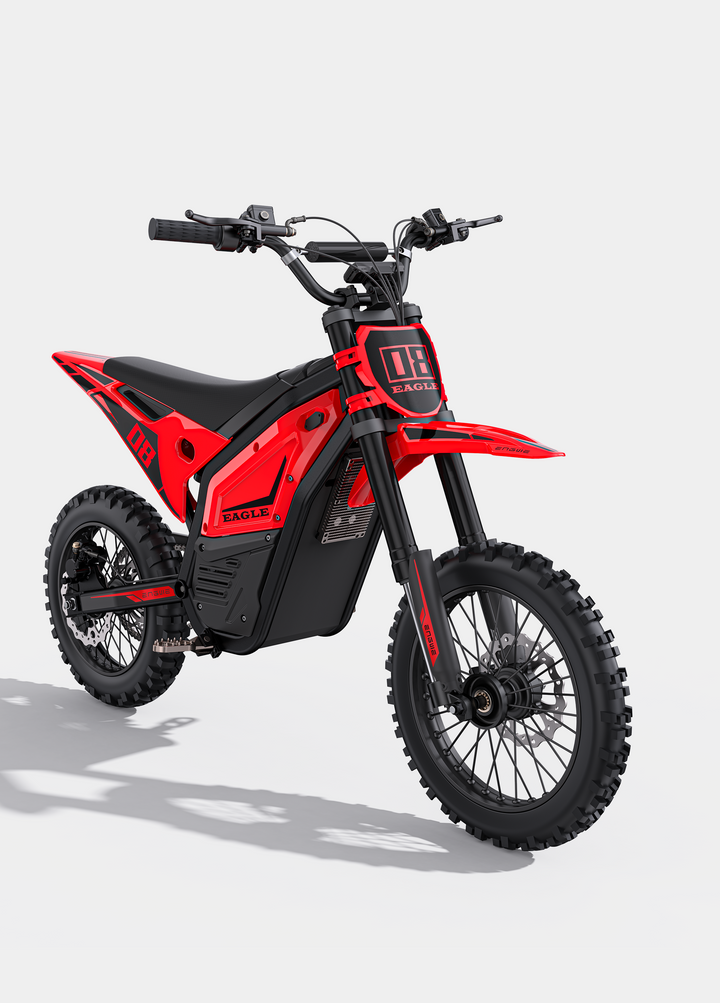
With potholes, a usual commute may become challenging to deal with, especially when one encounters unexpected potholes. An appropriately selected electric commuter bike may give additional comfort and control due to its suitable tires, suspension, effective brakes, and balanced handling.
Nevertheless, there is no such bike that can make extreme road conditions harmless; therefore, one needs to avoid big potholes if possible. One can start by considering bikes that emphasize comfort in different ways.

Electric Commuter Bikes for Rougher City Streets
The best electric bikes for commuting are those that incorporate the practicality of everyday usage with components that match the terrain encountered by the cyclist.
In case the roads are full of potholes, the suspension, tires, brakes, riding position, and range should be taken into consideration.
ENGWE EP-2 3.0 – For Foldable City Commuting
The ENGWE EP-2 3.0 is a combination of a foldable frame, with 90Nm of torque, great range, and an 8A fast charging system.
With its compact design, the model may prove particularly handy in cases where an electric bike for commuting is expected to take up little space in terms of home or office storage. Commuters, however, should pay more attention to folding ability, brakes, tires, etc., when thinking about the uneven urban roads.


ENGWE L20 3.0 – For Comfort Across Uneven Urban Roads
The ENGWE L20 3.0 makes use of full suspension technology that minimizes the impacts of vibrations and rough roads. Thus, comfort is one of the key considerations in the design of this utility-oriented bicycle.
The ENGWE electric bike also provides a combination of 90 Nm of torque, a 720 Wh detachable battery, 8A fast charging capacity, and anti-theft technology.


Velotric Discover 2 – For Suspension-Assisted Commuting
The Velotric Discover 2 is specially designed as a commuter e-bike and comes equipped with an 80 mm hydraulic suspension fork along with 27.5×2.4 inches tires.
Additionally, this bike also comes with hydraulic disc brakes and an upright riding position. This makes it very much pertinent for people who want to compare a commuter electric bike for bad pavement, but not for those with deep potholes.

Aventon Level 4 – For Everyday Rough-Road Commuting
Aventon Level 4 is designed with city commutes in mind, featuring both a suspension fork and a suspension seat post for rugged terrain.
With its commuter-specific frame design, removable battery, rack, and fenders, it offers a functional, city-focused design. Cyclists looking for an electric bike for city commuting can think about how these features will help them during frequent commutes on different roads.

What Helps an Electric Commuter Bike Handle Pothole-Heavy Roads?
A perfect best electric commuter bike designed for use on broken streets in the urban environment will require more than just the help of the motor.
For instance, suspension will be able to take care of some road bumps, and proper tires will provide additional traction and cushioning. Predictable brakes will enable a cyclist to regulate their speed before encountering a challenging area. Proper fit and size of the electric commuter e bike are also essential factors.
- Suspension: A suspension fork or full-suspension system could make riding over damaged areas easier.
- Tires: Proper tire width, build, maintenance, and inflation will have an impact on comfort, traction, and handling regarding the road imperfections.
- Brakes: The rider needs to brake predictably to slow down in advance instead of braking abruptly while riding through the pothole.
- Rider fit: A commuter electric bike for adults would be tailored to the individual rider's physique.
- Visibility: Proper lighting and road surveillance will give the rider extra time to detect the pothole and choose another route.
- Speed management: Assistance from the motorized unit means that the rider must accelerate to ride through the damaged area at a higher speed. Braking prior to going through a pothole gives more control over the bike.

Choosing a Commuter E-Bike for Daily City Roads
The commute electric bike should be chosen based on the entire route and not just some difficult sections. The riders who wish to purchase an electric bike for daily commute should take into consideration factors like distance, road condition, range of battery, availability of charging points, storage options, braking system, rider fit, and carrying capacity.
For difficult roads, suspension and the right type of tires may need more attention, but those commuters who travel on properly maintained roads may opt for a lighter and simpler design.
When choosing the best commuter e bike or best electric bike for commuting, one should start with the real conditions of the route. It is also important that an electric bike for city commute becomes useful even after the ride; thus, safe parking, the size of the e-bike battery removal, and equipment carriage become equally important aspects as riding comfort.

Riding More Confidently Around City Potholes
Even good-quality electric commuter bikes should not be considered machines that will be charged through every pothole. The rider needs to look further ahead, leave sufficient room to react, and slow down when approaching damaged areas. If possible, it is better to avoid hitting a bad pothole rather than checking how much your tires or suspension can endure.
Bike condition is also important. One should check the tire pressure and wear, condition of the wheels and braking system, suspension, if any, as well as all other important parts of the machine according to the manufacturer’s guidelines. In case you hit a bad spot on the road, make sure that nothing special happened to your bike.

Conclusion
A good electric commuter bike can help make difficult city streets easier to deal with thanks to the right tires, brakes, handling, and even suspension when needed. Such options will allow you to decrease the discomfort from bad roads somewhat, but they won’t make deep holes safe.
When choosing an electric bike for commuting purposes, think about the whole route in addition to your size and other needs. The best electric commuter bikes offer an optimal combination of practicality on city streets and comfort needed due to the quality of your roads.
Frequently Asked Questions
What Is the Best Commuter E Bike for Pothole-Heavy Roads?
What Is the Best Commuter E Bike for Pothole-Heavy Roads?
The best commuter e bike to cope with tough city roads will need adequate tires, reliable brakes, good geometry, and suspension where necessary. One's body type, distance to cover, battery needs, storage space, and extent of road damage should be considered.
What Is the Best Electric Bike for Commuting Every Day?
What Is the Best Electric Bike for Commuting Every Day?
The best electric bike for commuting will be the one that corresponds to your route and habits. Focus on range, fit, brakes, tires, comfort, charging convenience, storage, cargo capabilities, and surface conditions as opposed to just motor power.
Is an Electric Bike for City Commuting Good on Potholes?
Is an Electric Bike for City Commuting Good on Potholes?
An electric bike for city commuting is used for urban commuting and will cope with ordinary road surfaces, but it may break its wheels or other elements due to deep holes in the road surface. Try to avoid such holes as much as possible.
Is a Commuter Electric Bike for Adults Suitable for Rough Roads?
Is a Commuter Electric Bike for Adults Suitable for Rough Roads?
Commuting by a commuter electric bike for adults may be adequate for rugged road surfaces if tire design, suspension, braking, fit, and posture are suitable to handle such a road surface. Maintenance and proper speed regulation become necessary, especially when the path is damaged.