A fast electric bike is definitely thrilling to ride on an open road and for longer distances, but with speed comes changes to the way your bike handles acceleration, turns, and braking. Instead of focusing on maximum speed alone, think about how well the bike’s brakes, tires, suspension, frame, and riding style are suited to your performance requirements.
Of course, the type of e-bike to get should also depend on your riding environment. Even bikes that have great specs on paper may differ greatly from each other in terms of performance depending on what style of bike you get.

Fast E-Bikes Built for Different Riding Styles
Improved performance results from different combinations of motor power, torque, battery size, and the overall design of the bike.
Even more important than that, the bike should be suitable for the conditions under which it will be ridden. The following are five different ways to go about it.
ENGWE M20 3.0
The ENGWE M20 3.0 is a moped-style e-bike for riders who want strong acceleration and substantial off-road performance.
The full suspension ensures that the stability of the bike is not compromised even when the surface is bumpy, while the wider puncture-resistant tires give you stable ground contact. The four-piston hydraulic brakes with 203mm rotors ensure strong braking capabilities.


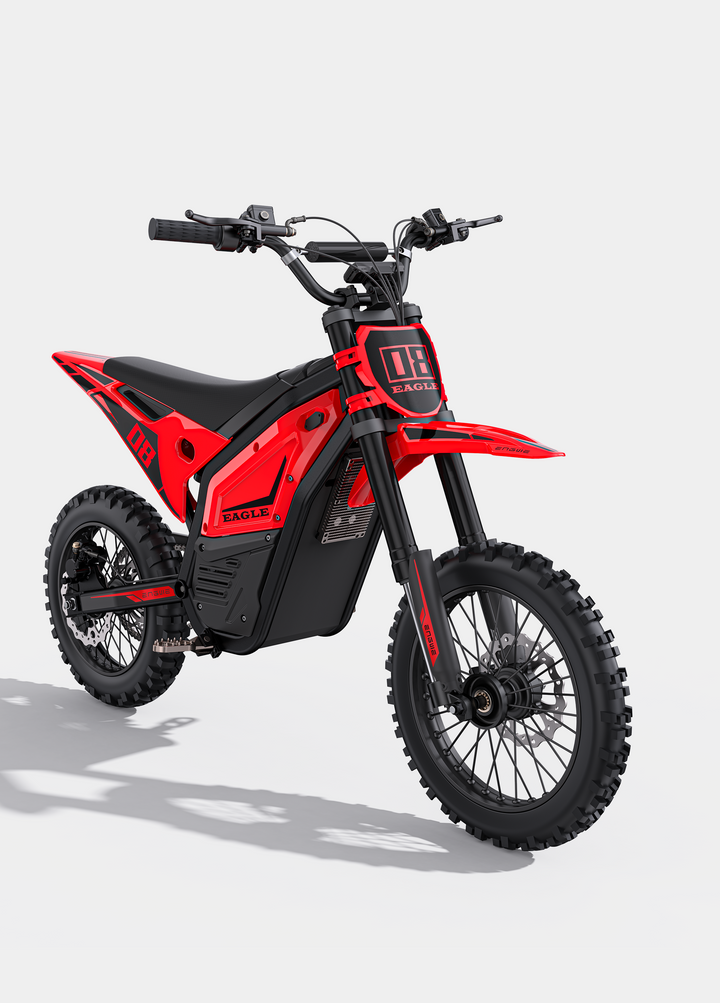
ENGWE Eagle
The ENGWE Eagle is an electric dirt bike, mainly made for kids and teens, so rider fit and experience deserve particular attention. With a mid-drive configuration, the model provides great performance on rough ground, while the use of suspension and tires F14/R12 is tailored specifically for dirt biking.
Additionally, it features 200mm hydraulic disc brakes and a magnetic emergency switch. Taking into account that the top speed is said to be 45 mph, safety becomes one of the priorities.


ENGWE E26 3.0
The ENGWE E26 3.0 has a fat-tire all-terrain design that enables it to deliver its performance. It comes with dual hub motors that offer ample help, but you have the option of shifting between single- and dual-motor use based on the surface.
It is a full-suspension bike with 26 x 4 inches tires and 203mm hydraulic disc brakes for efficient braking. ENGWE lists speeds of 28 mph using the throttle and 31 mph with pedal assist.


Trek Allant+ 8S
The Trek Allant+ 8S demonstrates that high-assisted speed can be incorporated in a relatively conventional bicycle frame.
The bike’s Bosch Performance Speed mid-drive motor gives an assisted speed of 28mph. The commuter geometry ensures that the bike retains a more bicycle-like nature rather than a scooter-like one. Hydraulic disc brakes and 27.5" tires add to the bike’s road-like features.

Aventon Aventure 3
The Aventon Aventure 3 features a fat-tire design that is geared towards regular or recreational use rather than speed.
The upright design could be appealing to those who are looking for something bigger but do not necessarily require an e-motorbike. This is helpful as a point of comparison to other bikes with greater outputs since control of the ride is not dependent on speed alone.

What Helps a Faster E-Bike Stay Under Control?
Controlling performance becomes even more vital as riding speed increases. Hydraulic brakes, proper tires, and consistent power delivery might enable better acceleration and braking. Suspension may be another factor that would keep the wheels under control in case the surface becomes bumpy or uneven.
The bike's weight and its geometry play a role too. The heavier bike may be easier to control when riding on an open surface but harder when making sharp turns at a low speed. What we should be aiming at is not finding the fastest ebike, but rather performance that suits our experience and riding conditions.

Should You Choose Speed Before Comfort and Handling?
A fast ebike does not mean that the bike performs well in everyday riding. A comfortable position will be a significant concern on long distances, whereas predictability in steering will become relevant in the presence of traffic, turning points, and tight spaces. Speed will not make up for a bike's poor handling.
Price should be taken into account as well. A fast cheap ebike sounds great at first, but brakes, wheels, battery, warranty, and after-sales service cannot be ignored, and it will be worth it only if its overall performance matches your plans.
Understanding Speed and U.S. E-Bike Rules
According to the most widely adopted U.S. three-class system:
- Class 1 e-bikes stop assisting the rider once 20 mph is achieved during pedaling.
- Class 2 offers motor power without pedaling for a maximum speed of 20 mph.
- Class 3 assists pedaling to speeds of 28 mph.
The classification, as well as the equipment and access restrictions, vary from state to state and city to city, which means one needs to learn the specifics of the applicable regulation.
It is important to understand that a bike's capabilities do not define where and how the vehicle can be classified as an e-bike. Models operating outside the common three-class limits may be treated differently depending on their configuration and jurisdiction.

Conclusion
Selecting a fast electric bike must be a matter of practicality and not necessarily of choosing the highest number in the specs. All aspects from brakes to weight, from tires to geometry, from suspension to assistance can impact the manageability of the performance in question.
A good match in a fast electric bike will be able to accommodate both your level of experience and the surroundings you are likely to ride through.
Frequently Asked Questions
How Fast Can an E-Bike Go Legally?
How Fast Can an E-Bike Go Legally?
In the U.S., the most common classification method is the three-class model, where Classes 1 and 2 typically offer assistance with motors up to speeds of 20 miles per hour, whereas Class 3 offers pedal assistance up to 28 miles per hour.
How Fast Does an Electric Bike Go?
How Fast Does an Electric Bike Go?
The power output for most commonly used electric bikes is limited to speeds of up to 20 or 28 miles per hour based on their category and design. The speed at which one rides might be influenced by several factors.
How Fast Can an Electric Bike Go?
How Fast Can an Electric Bike Go?
Certain high-performance and off-road electric bikes can go faster than 28 mph, subject to the specifications of the motor, batteries, control systems, gearing, and setup. Nevertheless, just because a bicycle is capable of going at such a speed does not mean that this is where it can travel legally at that speed.
How Fast Do Electric Bikes Go?
How Fast Do Electric Bikes Go?
Speeds for electric bicycles depend on their design and their intended purpose. E-bikes designed for commuters often run within the speed range specified for classes of e-bikes, but some other types of e-bikes can run faster and do not fit into the typical classifications.